If you were to bottle the essence of Kalk Bay, it would smell of three very distinct things: salty Atlantic spray, frying hake from the harbour, and the unmistakably sweet, musty scent of old paper and beeswax. While most of the Cape Peninsula is chasing the latest trend or the newest “Instagrammable” rooftop bar, this little fishing village has doubled down on its identity as a living time capsule.
For those of us who grew up wandering these narrow streets, the “Antique Trail” isn’t a formal route marked by signs; it’s a rhythmic crawl along the Main Road. It’s the kind of place where you set out to buy a loaf of sourdough and somehow return home with a 1920s brass sextant or a first-edition travelogue of the African interior. In a world that feels increasingly digital and ephemeral, Kalk Bay offers something tactile, heavy, and wonderfully strange.
Whether you’re a serious collector or just someone who enjoys the thrill of a “good rummage,” here is how to navigate the best antique trail in the Southern Hemisphere.
1. The Anchor: Quagga Rare Books and Art
Your journey has to start at Quagga Rare Books and Art. Located at 84 Main Road, this isn’t just a shop; it’s a portal. When you walk in, the first thing that hits you is the floor-to-ceiling shelves packed with leather-bound history.
Owned by the father-and-son team George and Simon Curtis, Quagga is where you go for the “serious” stuff. We’re talking 17th-century sea charts, rare maps of the Cape of Good Hope, and natural history prints that look like they belong in a museum. But don’t let the “rare” in the title intimidate you. While they certainly have high-ticket items (I once saw a signed Beckett play here that made my heart skip), they also have bins of old postcards and affordable prints that allow anyone to take a piece of history home.
Key Takeaway: If you’re looking for a gift that feels like a legacy—a map of a specific coastline or a vintage botanical sketch—this is the undisputed gold standard.
2. The Rummage: Kalk Bay Trading Post
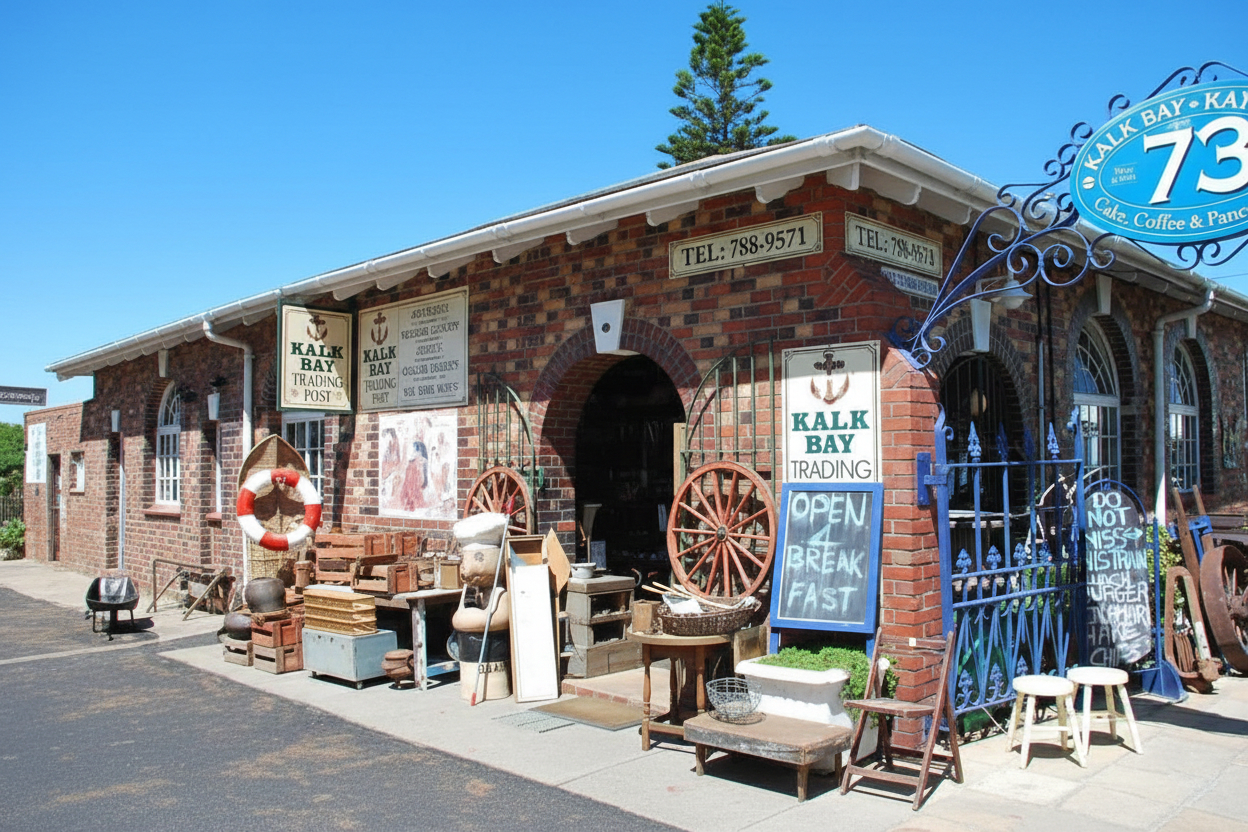
Just a few doors down at 71 Main Road, the vibe shifts from “refined gallery” to “eclectic treasure chest.” The Kalk Bay Trading Post is housed in the old village post office, and you can still see the original green postboxes at the entrance.
This is the place for the bargain hunters. It’s packed with what I like to call “nostalgia bait.” You’ll find old tin signs, vintage comic books, retro kitchenware, and a surprisingly deep collection of antique toys. It’s the kind of shop where you have to look twice at everything; that “dusty box” in the corner might just contain the exact 1950s camera lens you’ve been hunting for.
Key Takeaway: The Trading Post is all about the hunt. Give yourself at least 45 minutes to dig through the layers—the best finds are rarely on the top shelf.
3. The Hidden Alleys: Memory Lane and Catacombes
One of the best things about Kalk Bay is that it’s not just one-dimensional. To find the real soul of the trail, you have to duck off the Main Road. Look for the sign for Memory Lane—a tiny, cobblestone alleyway that feels like it’s been lifted straight out of a Dickens novel.
Here, you’ll find Catacombes, a quirky, beautifully curated space that leans into the bohemian side of the village. It’s less about “heavy furniture” and more about vintage fashion, estate jewelry, and those oddities that defy classification. Think beaded flapper dresses hanging next to old medical diagrams.
Just across the lane is the Kalk Bay Antiques Centre, which serves as a collective for several different dealers. This is your best bet for larger pieces—Victorian wardrobes, mid-century modern chairs, and heavy oak dining tables that have seen a century of Sunday roasts.
4. The Intermission: Where to Refuel
By now, you’ll likely have “antique eyes”—that specific type of fatigue that comes from focusing on small details for too long. It’s time to break for lunch. Luckily, you’re in the culinary heart of the Deep South.
- Olympia Café and Deli: A Kalk Bay legend. Don’t look for a menu; it’s written on the chalkboard. Order the mussels or whatever pasta is on special. It’s loud, it’s chaotic, and the floor is usually covered in flour from the bakery next door, which is exactly why we love it.
- Dalebrook Café: If you want something a bit lighter and closer to the water, this is the spot. Their salads are fresh, their coffee is strong, and it’s located right across from the tidal pool.
- Cape to Cuba: For a bit of kitsch and a world-class cocktail, this beach-shack-turned-restaurant is iconic. The floor is sand, the décor is a wild mix of religious icons and Che Guevara posters, and the view of the harbour is unbeatable.
Key Takeaway: Kalk Bay gets incredibly busy on weekends. If you’re planning on eating at Olympia, try to get there before 12:30 PM, or be prepared to have a glass of wine on the sidewalk while you wait.
5. The Scenic Loop: Beyond the Shops
The “Antique Trail” isn’t just about what’s inside the stores; it’s about the landscape that inspired these collectors in the first place. Once you’ve finished your shopping, take a walk to clear your head.
The Kalk Bay Harbour
This is a working harbour, which means it’s gritty, real, and full of character. You’ll see the traditional wooden fishing boats (the “chukkies”) coming in with the day’s catch, and you’ll definitely hear the Cape Fur Seals barking for scraps. It’s the best place in the city to feel the raw connection between the people and the sea.
St James Beach
If the sun is out, take the 15-minute walk along the coastal path toward St James. You’ll pass the famous multi-colored bathing boxes. It’s a great way to see the “heritage” architecture of the area from a different perspective.
Boyes Drive
If you’re driving, make sure your return journey takes you up Boyes Drive. This mountain road runs parallel to the Main Road but sits several hundred meters higher. The view of False Bay from here is staggering—especially in February when the water is that deep, impossible blue.
6. Survival Tips for the Trail
After years of “Kalk Bay-ing,” I’ve developed a few rules to ensure the day doesn’t end in a parking-induced meltdown.
- The Train is Back: The Southern Line rail service is the most stylish way to arrive. The station is right in the heart of the village, and the views from the window as you skirt the Muizenberg coastline are better than any car ride.
- The “Cash is King” Myth: While most shops now take cards and tap-to-pay, having a bit of cash is useful for the smaller curio stalls or for tipping the local musicians who busk on the corners.
- Check the Tide: If you’re planning on a post-shopping dip in the Dalebrook Tidal Pool, check the tide. At high tide, the waves wash over the wall, which is exciting but can make it hard to keep your towel dry!
- Shipping is Easy: Don’t worry about how to get that massive antique mirror home. Most of the major shops, especially Quagga and the Antiques Centre, are very experienced in international and local shipping.
Bold Takeaway: Don’t buy the first thing you see. Walk the whole length of the Main Road first, have a coffee, and then go back for the piece that you can’t stop thinking about.
Why Kalk Bay Endures
In a city that is rapidly modernizing, Kalk Bay remains stubbornly itself. It’s a place where the “antique” isn’t just a commodity; it’s a philosophy. There is a respect for things that have lasted—for solid wood, for hand-stitched linen, and for books that require a physical page-turn.
The people you meet behind the counters in these shops aren’t just salespeople; they are historians of the mundane. They can tell you why a specific type of glass was used in 19th-century lanterns or which Cape furniture maker was active in the 1850s. That’s the real “treasure” of the trail—the stories that come with the objects.
So, the next time you have a free Saturday, skip the mall. Head south, breathe in the fish and the old paper, and see what the tide has washed in.