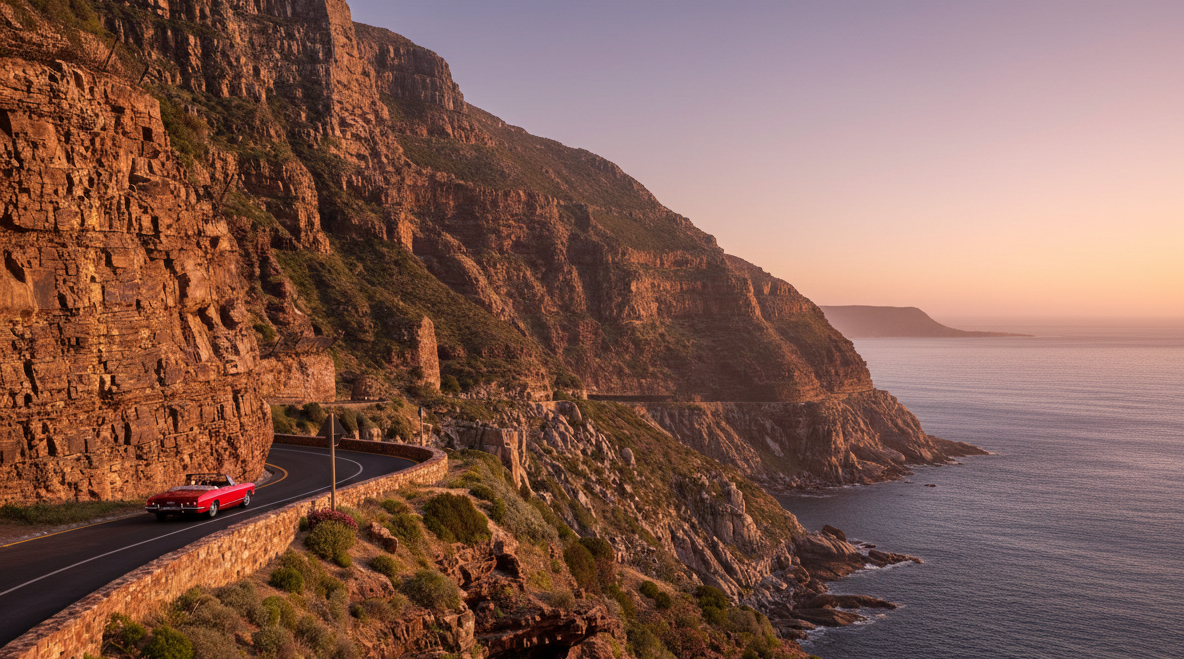
There is a specific moment, usually about three minutes after you’ve cleared the toll plaza in Hout Bay, where the world just… opens up. You’ve navigated the initial ascent, shifted into third gear, and suddenly, the guardrail is the only thing standing between your tires and a vertical 100-meter drop into the churning turquoise of the Atlantic. Your palms get a little damp, your passengers stop talking to look out the window, and you realize that every “Top 10 Drives” list you’ve ever read wasn’t exaggerating.
The route from Hout Bay through Chapman’s Peak and down to the tip of Africa at Cape Point remains the undisputed heavyweight champion of scenic journeys. But here’s the thing: most people do it wrong. They rush. They treat it like a transit route between A and B, when in reality, this 50-kilometer stretch of tarmac is a living, breathing narrative of South Africa’s wilder side.
If you’re planning to tackle “Chappies” and the Southern Peninsula this season, put away the GPS for a second. We’re going to do this the way the locals do—with plenty of salt air, way too much caffeine, and a healthy respect for the baboons.
1. The Starting Line: Hout Bay and the “Pre-Game” Caffeine
You don’t just start a drive like this on an empty stomach. Hout Bay, or “The Republic” as it’s affectionately known by the locals, is the gateway. Before you even think about the mountain, you need to head toward the Hout Bay Harbour.
The harbour in February is a sensory overload. You’ve got the smell of diesel from the fishing trawlers, the barking of the Cape Fur Seals lounging on the piers, and the sound of the seagulls fighting over scraps.
Where to Fuel Up
- Mainstream Coffee Roasters: This is the spot for the serious drinkers. It’s unpretentious, the beans are roasted on-site, and it provides the necessary kick to handle the 114 curves ahead.
- Fish on the Rocks: If you’re starting your drive a bit later and want an early lunch, this is an institution. It’s gritty, it’s yellow, and the fish and chips have been legendary since 1951. Eat on the rocks outside, but keep an eye on your calamari—the gulls here are tactical geniuses.
Key Takeaway: Hout Bay is your last chance for “city” amenities. Once you cross the peak, the vibe shifts from bustling suburb to coastal wilderness.
2. Chapman’s Peak Drive: 114 Curves of Pure Adrenaline
Now we get to the main event. Chapman’s Peak Drive, or “Chappies,” is an engineering miracle. Carved into the near-vertical face of the mountain between 1915 and 1922, it’s a series of “half-tunnels” and hairpins that make you feel like you’re starring in a high-budget car commercial.
In February, the weather is usually on your side. The “South Easter” wind might be howling elsewhere, but Chappies is often sheltered by the massive bulk of the mountain.
The Protocol for the Peak
- The Toll: The toll for a light passenger vehicle is around R61. You can pay with credit cards or cash, but the “Day Pass” is a local secret. If you enter from the Hout Bay side and just want to go to the main lookout and back, tell them you want a day pass—it’s free, provided you return before the sun sets.
- The Main Lookout: There is a massive, paved pull-off at the highest point. Don’t skip this. This is the iconic view looking back toward Hout Bay and the Sentinel. It’s where you’ll see the “half-tunnels” in all their glory.
- The “Secret” Picnic Spots: Further down toward the Noordhoek side, there are dozens of smaller, gravel pull-offs. These are the best spots to just sit on the stone wall and watch the kelp forests swaying in the swell below.
Key Takeaway: Chappies is a slow-speed zone. The limit is 40km/h for a reason. Not just for safety, but because if you drive any faster, you’re robbing yourself of the most expensive view in the country.
3. Noordhoek: The Great Breathing Space
As you descend the southern side of the peak, the landscape changes abruptly. The claustrophobic cliffs open up into the vast, white expanse of Noordhoek Beach. This is arguably the most beautiful beach in the Cape—8 kilometers of pristine sand where you’re more likely to see a horse than a crowd of people.
The Mid-Drive Pitstop
Once you’re off the mountain, you’ll hit Noordhoek Village. This is where the “yummy mummies,” surfers, and artists congregate.
- The Village Roast: Located in the Noordhoek Farm Village, this is the neighborhood heartbeat. Their outdoor seating area is perfect for people-watching.
- Aegir Project Independent Brewery: If you’ve finished your drive for the day (or have a designated driver), this is a mandatory stop. Their “Giant Slayer” IPA is world-class, and their Neapolitan-style pizzas are the best in the South. The deck looks right out toward the ocean spray of Long Beach.
4. The Wild West: Kommetjie to Scarborough
From Noordhoek, you’ll head south toward Kommetjie. This is the “Wild West” of the Peninsula. It’s where the big-wave surfers live, and the air always feels five degrees cooler and twice as salty.
Misty Cliffs and Scarborough
The stretch of road between Kommetjie and Scarborough is, in my opinion, even more beautiful than Chapman’s Peak because it’s so much more raw. You’ll pass Misty Cliffs, a tiny hamlet where the houses are built so close to the surf that they’re perpetually covered in a fine layer of sea salt.
Then comes Scarborough. This is an “off-the-grid” kind of place. There are no streetlights here, and the residents fought to keep it that way to protect the stargazing.
- Whole Earth Café: A beautiful, light-filled space that serves incredible vegan and vegetarian-friendly breakfasts and lunches. It’s the perfect place to decompress after the adrenaline of the mountain drive.
Key Takeaway: This section of the drive is about the “un-groomed” beauty of the Cape. It’s rugged, windy, and utterly peaceful.
5. The Tip of Africa: Cape Point Nature Reserve
Finally, you reach the gates of the Cape Point Nature Reserve. This is a protected wilderness area. You are no longer in the city. You are in a place where the wildlife has the right of way.
What to See Inside
- The Flying Dutchman Funicular: If you don’t feel like the steep hike up to the old lighthouse, take the funicular. It’s a fun, short ride that saves your legs for the cliff walks.
- The “Cape of Good Hope” Sign: Follow the road down to the shore to find the Cape of Good Hope. It is the most south-western point of the African continent. Expect a queue for the famous photo with the wooden sign, but the walk along the boardwalks there is spectacular.
- The Wildlife: You will see ostriches on the beach (a truly bizarre sight) and plenty of bontebok. A word of warning: The baboons here are NOT your friends. They are highly intelligent, opportunistic thieves. Keep your car windows closed and your food hidden. They are particularly active near the parking lots.
Lunch at the Edge
- Two Oceans Restaurant: Built into the cliffs, the views from the deck are staggering. It’s a bit more formal, specializing in seafood, and it’s the perfect way to cap off the journey before the long drive back.
6. Practical Advice for the Season
To make sure your drive doesn’t turn into a logistical headache, keep these three things in mind:
- Check the “Chappies” Status: Chapman’s Peak Drive is occasionally closed due to high winds or rockfall risks. Before you leave Hout Bay, check the official website or look for the electronic signs at the start of the road.
- The Golden Hour: If you can, time your return trip (or your arrival at Scarborough) for sunset. The way the light hits the cliffs of the Twelve Apostles from a distance is something you’ll remember for a decade.
- Fuel Up Early: There are no petrol stations inside the Cape Point Reserve, and the nearest one is a good 20-minute drive away in Simon’s Town or Sun Valley. Don’t let the “Low Fuel” light ruin your wilderness experience.
The Verdict: Why We Keep Coming Back
I’ve done this drive probably fifty times, and I still find myself reaching for my camera at the same spot on Chapman’s Peak. There is something about the scale of it—the way the mountain meets the sea with such violence and beauty—that never gets old.
As our world gets more crowded and digitized, a drive like this feels like a necessary recalibration. It’s a reminder that there are still places where the wind is the boss and the horizon is the only thing on the schedule.
The drive from Chapman’s Peak to Cape Point is not a “tourist trap.” It is a world-class geographical marvel that just happens to have a road running through it. Take the day. Bring the coffee. Watch for the baboons.