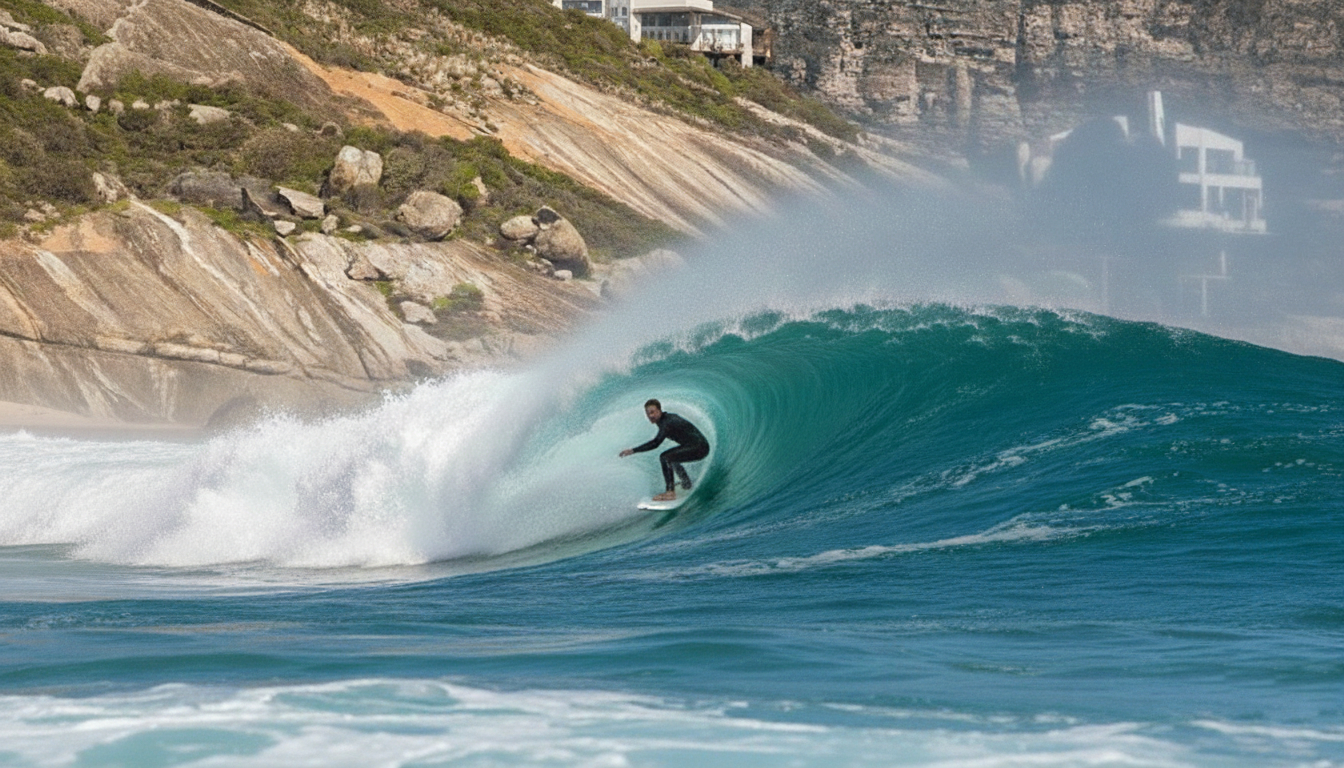
So, you’ve officially graduated from the “white-water waltz.” You’ve stopped being a danger to yourself and others at the Muizenberg shorebreak, you can pop up without looking like a folding lawn chair, and you’ve finally mastered the art of angling your take-off. But here is the problem: where do you go next?
The “intermediate purgatory” is a real thing in Cape Town. You’re too advanced for the gentle, chaotic soup of the beginner zones, but you aren’t quite ready to charge the heavy, bone-crunching barrels of The Hoek or the shivering heights of Dungeons. You need a wave that has enough face to practice your carves, but won’t send you to the chiropractor if you mistime a section.
The Cape Peninsula’s surf scene is as vibrant as ever. The water is (relatively) warm, the South Easter wind is providing those clean, offshore faces, and the swells are consistent enough to keep your paddle fitness at an all-time high. I’ve spent the last few weeks scouting the line-ups from Blouberg to Kommetjie to find the spots that offer the perfect balance of challenge and fun. Grab your 3/2mm steamer and wax up your mid-length; here is your guide to the best intermediate surf spots in the Cape.
1. Long Beach, Kommetjie: The “High-Performance” Training Ground
If you ask any local pro where they learned to actually turn a surfboard, they’ll likely point toward Long Beach. Located in the quiet, salt-crusted village of Kommetjie, this is arguably the most consistent wave on the Atlantic side.
The Wave
Long Beach is famous for its “A-frame” peaks. On a good day, you get a clean left and a shorter, punchier right. Because it breaks over a sandy bottom (with a few scattered rocks), it’s forgiving. It’s a fast, fun wave that allows you to practice your bottom turns and generate speed—essential skills for any intermediate rider.
- Best Wind: South Easter (Offshore).
- Best Swell: South West.
The Vibe
It can get crowded, especially on a Saturday morning when the “Kommetjie groms” (who are probably better surfers than all of us combined) are out in force. However, the line-up is generally friendly.
- Pro-Tip: Don’t sit right on the main peak if you’re still gaining confidence. There are usually smaller, less-contested peaks 50 meters to the left or right that are perfect for getting a high wave count.
Key Takeaway: Long Beach is the best place to transition from “just riding” to “actually surfing.” It’s a performance wave that will highlight exactly where your technique needs work.
2. Muizenberg “Backline”: Graduating from the Nursery
We all know Muizenberg Beach as the beginner’s mecca. But don’t write it off just because you’ve seen a thousand tourists falling off foamies there. When the swell picks up to the 4-6ft range, the “Backline” at Muizenberg becomes an intermediate paradise.
The Wave
At the “Corner” (near the Surf Emporium), the wave wraps around the pier and creates a long, peeling right-hander. Because the sandbank is so gradual, the wave doesn’t “dump”—it rolls. This gives you a massive amount of time to think about your foot placement and weight distribution.
- The Challenge: The paddle out. On a big day, getting through the “washing machine” of the inside section will test your duck-diving skills (or your turtle-roll endurance).
Where to Post-Surf
Once you’ve successfully paddled back in, head straight to Tiger’s Milk Muizenberg. It’s right on the beachfront, has racks for your boards, and the “Stepchild” burger is the unofficial recovery meal of the False Bay surf community.
Key Takeaway: Muizenberg Backline is perfect for building “wave IQ.” It’s a long ride that rewards patience and smooth, flowing movements.
3. Big Bay, Blouberg: The Atlantic Wind Machine
If you live in the City Bowl or the Northern Suburbs, Big Bay is your local office. It’s a beautiful, wide bay with a spectacular view of Table Mountain, and it’s specifically catered to the intermediate crowd.
The Wave
Big Bay is a bit of a “mushy” wave, which is actually a blessing when you’re trying to learn how to do cutbacks. It doesn’t have the raw power of the Southern Peninsula spots, which means you have to work a bit harder to stay in the “pocket.”
- The Wind Factor: This is the kite-surfing capital of the world. If the wind is pumping, the surf will be blown out. You want to get here early in the morning before the “Cape Doctor” wind wakes up at midday.
The Amenities
The beauty of Big Bay is the Eden on the Bay complex right behind the beach. You can finish your session and be sitting with a coffee at Moyo within five minutes.
Key Takeaway: Big Bay is a low-consequence wave. It’s perfect for those days when you want to stay in the water for three hours without feeling like you’re in a survival situation.
4. Glen Beach: The “Step-Up” Challenge
This is the “Black Diamond” of the intermediate list. Glen Beach is a tiny, beautiful pocket of sand tucked between Clifton and Camps Bay.
The Wave
It’s a hollow, powerful beach break. It’s much faster than Muizenberg and punchier than Big Bay. Why is it on the intermediate list? Because it’s the best place to learn how to take a “late drop.” You have to be quick, decisive, and committed. If you hesitate at Glen Beach, the Atlantic will let you know.
- The Risk: It’s a very small take-off zone. Localism can be a factor here, so be sure to mind your manners, wait your turn, and don’t drop in on anyone.
After the Adrenaline
Walk across the rocks to The 41 in Camps Bay for a celebratory drink. You’ll feel like you’ve earned it after navigating the Glen Beach shorebreak.
Key Takeaway: Glen Beach is for the intermediate surfer who is ready to get their hair wet. It’s a “short and sweet” wave that teaches you about power and positioning.
5. The “Secret” Spots: Beyond the Crowds
While the main beaches are great, part of the joy of surfing in the Cape is the exploration. Many intermediates are heading further south to escape the “Surfer’s Corner” crowds.
- Buffels Bay: Located inside the Cape Point Nature Reserve, this is a very rare, fickle wave. It only works on a massive swell, but when it does, it’s a long, gentle point-break style wave that feels like something out of a movie.
- Boulders Beach: No, you aren’t surfing with the penguins (usually), but the “Windmill Beach” area just past the penguins has some small, rocky peaks that can be incredibly fun on a North Westerly wind.
Survival Tips for the Intermediate Rider
Surfing in Cape Town isn’t just about the waves; it’s about the environment. To ensure you stay stoked rather than stressed, keep these essentials in mind:
The “Sharky” Reality
Let’s address the elephant in the water. We share the ocean with Great Whites. However, the Shark Spotters program is world-class.
- The Rule: Check the flags. A green flag means visibility is great and no sharks have been spotted. A black flag means “spotting conditions are poor”—this is when you should be extra cautious. If the siren goes off, get out of the water calmly and immediately.
The Etiquette (Don’t be “That Guy”)
Nothing ruins a session faster than bad vibes.
- Don’t Snake: Don’t paddle around someone to get closer to the peak.
- Don’t Drop In: The person closest to the “peak” (where the wave is breaking) has right of way.
- Apologize: If you mess up and get in someone’s way, a simple “My bad!” goes a long way in keeping the line-up friendly.
Gear Check
In February, the water on the Atlantic side can still be a chilly 11-14°C due to upwelling. A good 4/3mm wetsuit is the standard, but many intermediates are now using “heated vests” or high-tech 3/2mm suits that offer better flexibility for paddling. If you need a gear refresh, Lifestyle Surf Shop in Muizenberg is a local institution that won’t steer you wrong.
Why We Do It: The “Stoke” Factor
There is a specific feeling that happens when you finally “click” with a wave. You aren’t fighting the ocean anymore; you’re moving with it. You see the line you want to take, you lean into the rail, and for four or five seconds, the rest of the world—the traffic, the emails, the stress—simply doesn’t exist.
Cape Town is one of the few places on Earth where you can be in a world-class surf line-up twenty minutes after leaving a high-powered office in the CBD. For the intermediate rider, the city is a giant playground. Every beach offers a different lesson, and every swell is a chance to get 1% better.
Bold Takeaway: You don’t need to be a pro to have the best session of your life. You just need the right wave for your level, a bit of respect for the locals, and the willingness to take a few “on the head” to get to the backline.
So, check the wind, watch the cams, and get out there. The swell is looking good for the weekend, and that Long Beach left is calling your name.