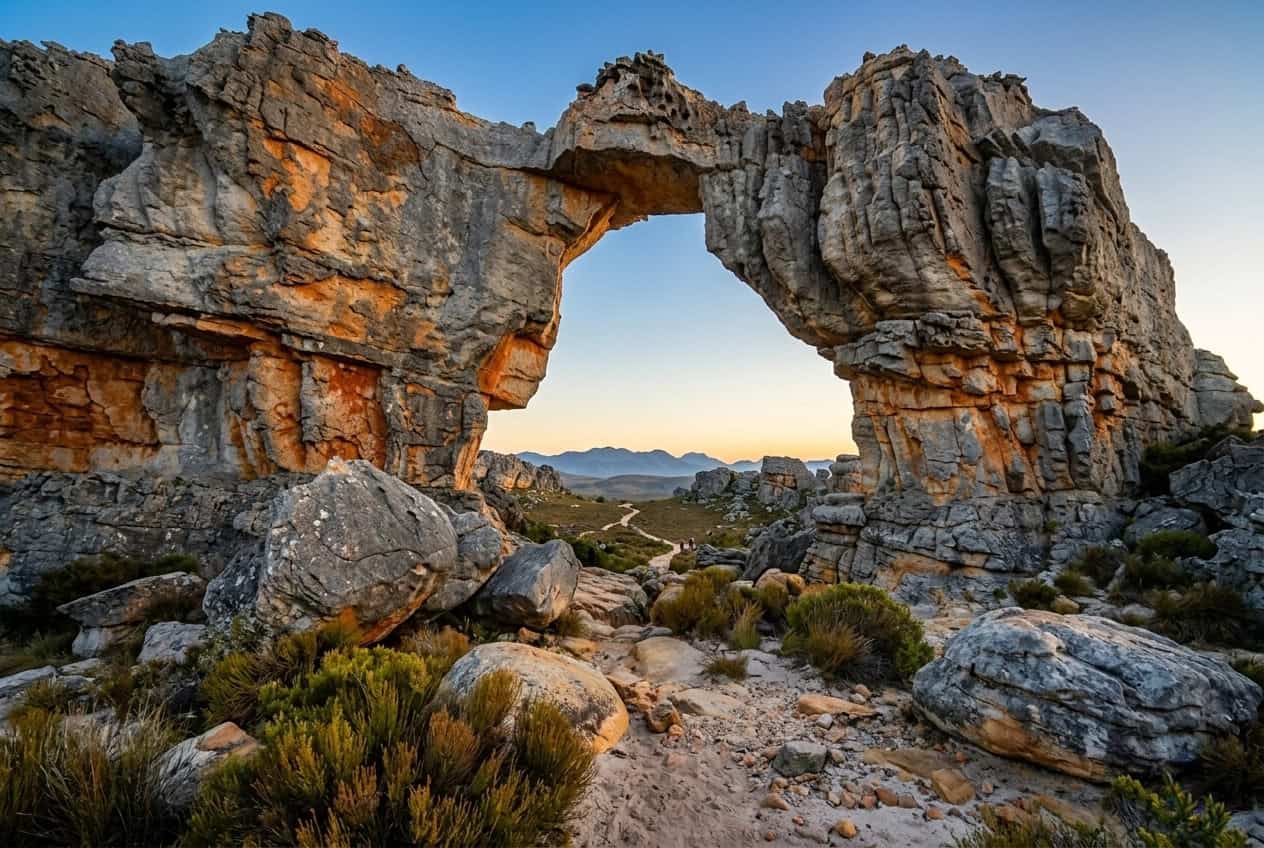
There is a moment, usually just as you crest the Piekenierskloof Pass on the N7, where the air changes. The humid, salty breeze of Cape Town is replaced by something drier, sharper, and scented with a mix of sun-baked dust and wild Buchu. You’re leaving the green orchards of the Citrusdal valley behind and entering a world of twisted orange sandstone, ancient San rock art, and silence so profound it actually makes your ears ring.
I’ve been coming to the Cederberg Wilderness Area for over a decade, and it remains my favorite place to disappear. It isn’t a “manicured” getaway. The roads are gravel, your cellphone signal will die about twenty minutes past the Algeria forest station, and the sun in late summer is a physical weight on your shoulders. But that’s the point. You don’t come to the Cederberg to stay connected; you come to remember what the stars look like when there’s zero light pollution.
Whether you’re a serious hiker looking to bag the Wolfberg Arch or a casual traveler wanting to sip Rooibos tea where it’s actually grown, here is the definitive plan for a weekend in the “Berg.”
1. Friday: The Dusty Descent into the Heart of the Rock
If you’re leaving Cape Town, try to hit the road by 2:00 PM. The drive takes about three to four hours, depending on how many slow-moving trucks you encounter on the N7.
The Pit Stop: Kardoesie
Before you commit to the gravel, stop at Kardoesie Shop & Restaurant at the top of the pass. Grab a bag of dried peaches and some local honey. It’s the last bit of civilization before the “real” Cederberg begins.
Checking In
For this itinerary, I recommend staying in the “Central Cederberg” area. This keeps you close to the most iconic landmarks.
- Kromrivier Cederberg Park: This is the oldest tourist farm in the area, and it is still the gold standard for a mix of luxury chalets and high-end camping. They even have their own craft brewery.
- Sanddrif Holiday Resort: Located on the Dwarsrivier farm, this is the base camp for the famous Wolfberg hikes and the home of Cederberg Wines.
Key Takeaway: The Cederberg is vast. If you stay too far north near Clanwilliam, you’ll spend your whole weekend driving. Stick to the Dwarsrivier/Kromrivier axis for the best experience.
2. Saturday Morning: The Pillars of the Earth
Saturday is your “big” day. In February, the heat can reach 35°C (95°F) by midday, so you need to be on the trail by 6:00 AM. Trust me on this.
The Icon: Wolfberg Arch and Cracks
The hike to the Wolfberg Arch is a rite of passage. You start at Sanddrif (you’ll need a permit from their office). The first hour is a steep, heart-pumping scramble up to the “Cracks”—a series of deep, narrow fissures in the mountain.
- The Narrow Crack: If you aren’t claustrophobic, take the narrow route. You’ll have to squeeze through tight gaps and shimmy under fallen boulders. It’s pure adventure.
- The Arch: Once through the cracks, it’s a long, relatively flat walk across a lunar landscape to the Arch itself. Standing under this massive natural bridge, you feel very small in the best way possible.
The Alternative: The Maltese Cross
If the Cracks sound too intense, head toward the Maltese Cross. It’s a gentler four-hour return walk that leads to a five-story-tall monolithic rock standing alone on a plateau. It’s the ultimate “Cederberg” photo op.
Key Takeaway: Water is non-negotiable. There are no reliable streams on the Wolfberg plateau in late summer. Carry at least 3 liters per person, or you will regret it by 11:00 AM.
3. Saturday Afternoon: Ancient Echoes and Cold Brews
After a morning of heavy hiking, your legs will be jelly. Spend the afternoon soaking in the history and the local flavors.
The Stadsaal Caves and Rock Art
Drive over to the Stadsaal Caves. These aren’t dark, subterranean tunnels; they are massive, open-air caverns carved by wind and water.
- The Graffiti: Look for the “historic” graffiti near the entrance. Some of it dates back to the 1800s, including signatures from famous South African political figures who used these caves as a meeting place.
- The Elephants: A short walk from the main caves takes you to the Elephant Rock Art site. These San paintings are thousands of years old and remain incredibly well-preserved. There is something deeply moving about seeing a painting of an elephant on the same rock where a hunter-gatherer stood three millennia ago.
The Cederberg Brewery
By 4:00 PM, you’ve earned a drink. Head back to Cederberg Brewery at Kromrivier.
- The Order: Try the Baviaans Gold Belgian Ale. It’s crisp, cold, and made with the pure mountain water you’ve been sweating out all morning.
- The Vibe: The taproom looks out over the Kromrivier valley. It’s the perfect place to watch the shadows lengthen over the fynbos.
4. Saturday Night: The Galaxy Awaits
One of the biggest mistakes people make in the Cederberg is going to bed early. Because of the high altitude and the lack of city lights, the sky here is world-class.
The Cederberg Observatory
Located on the Dwarsrivier farm, the observatory is usually open to the public on Saturday nights (weather permitting). They continue to host slide shows and telescope viewings.
- What to see: Even with the naked eye, you can see the Milky Way so clearly it looks like a cloud. Through their telescopes, you can often spot the rings of Saturn or the moons of Jupiter.
- Note: In February, the sky is usually crystal clear, but check their website or ask at the Sanddrif office for the exact “start” time.
Key Takeaway: Bring a warm jacket. Even if it was 35°C during the day, the desert temperature drops fast once the sun goes down.
5. Sunday Morning: The Maalgat Plunge
Before you pack up and head back to the “real world,” there is one final Cederberg tradition you have to honor: the mountain swim.
Maalgat Rock Pool
A short 20-minute walk from the Sanddrif campsites leads you to Maalgat. It’s a massive, deep natural swimming hole surrounded by high cliffs.
- The Jump: For the brave, there are several ledges to jump from (always check the water depth first, as it can change).
- The Chill: The water is tea-colored from the fynbos tannins and incredibly refreshing. It’s the perfect way to wash off the weekend’s dust before the long drive home.
6. The Return: Rooibos and Remembrance
On your way back toward the N7, take a slightly different route through Clanwilliam. This is the world capital of Rooibos tea.
The House of Rooibos
Stop here to stock up on every imaginable variation of the tea. They’ve expanded their range to include Rooibos-infused skincare and even gin. It’s the best way to take a piece of the Cederberg home with you.
Survival Guide for the Cederberg
To ensure your weekend is more “zen” and less “emergency rescue,” keep these tips in mind:
- Tires and Spare: The road from Op-die-Berg or Algeria is gravel. It can be corrugated and sharp. Ensure your spare tire is inflated and you know how to change it. You don’t need a 4×4, but a car with decent ground clearance is a massive plus.
- Permits: Most of the land is managed by CapeNature. You need permits for the Stadsaal caves and all major hikes. You can buy these at the Algeria forest station or the Sanddrif/Kromrivier offices.
- Fire Danger: February is the peak of the fire season. Never, under any circumstances, make an open fire outside of designated braai areas. The fynbos is highly flammable, and a single spark can devastate thousands of hectares.
- Snakes: This is Cape Cobra and Puff Adder country. They aren’t aggressive, but they are there. Watch where you put your hands when scrambling in the Cracks, and always wear closed shoes after dark.
Bold Takeaway: The Cederberg is a place of extremes. It is harsh, hot, and unforgiving, but it is also one of the few places left where you can feel a genuine connection to the ancient world. Don’t try to see everything in one go. Pick one big hike, one swim, and a lot of star-gazing.
The Cederberg has a way of staying with you. Long after you’ve washed the orange dust out of your hiking boots and returned to the traffic of Cape Town, you’ll find yourself thinking about the way the light hits the rocks at 6:00 PM. It’s a place that demands you slow down. And that might be the greatest luxury of all.