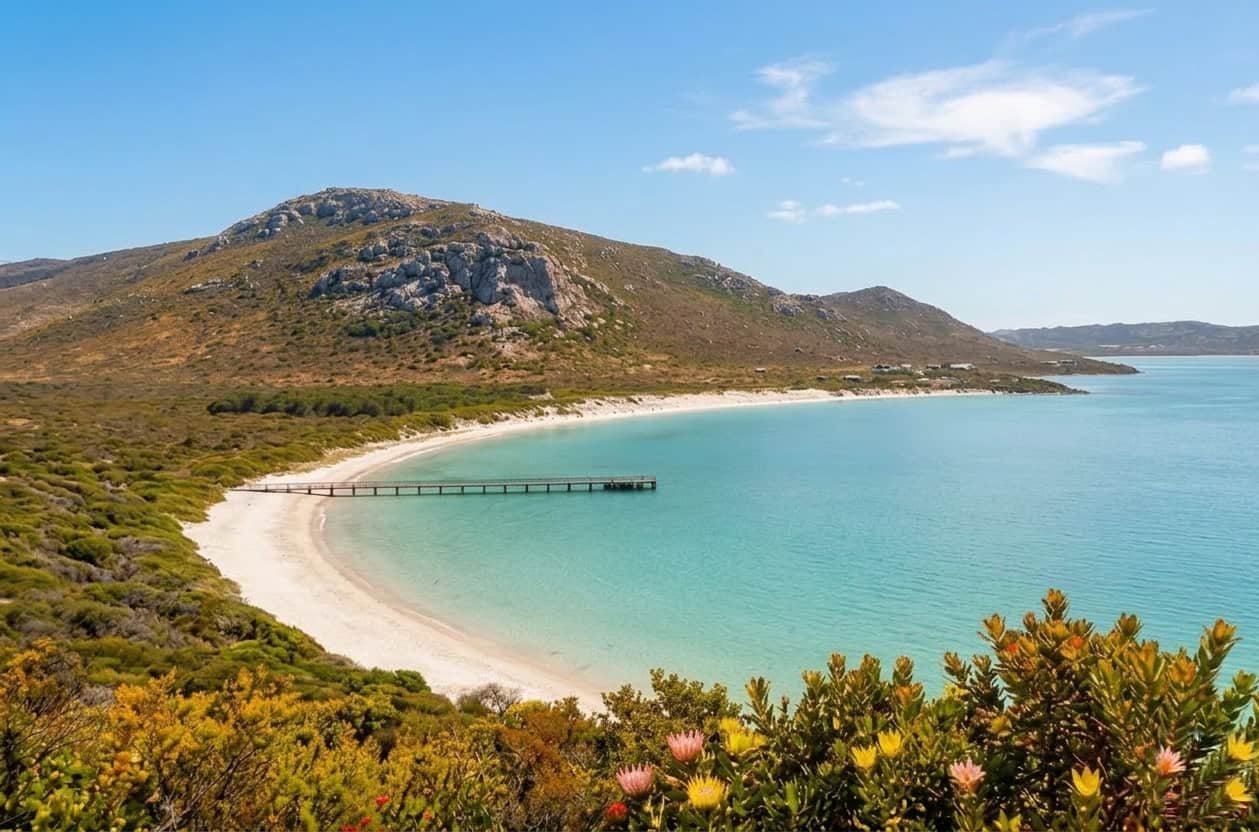
If you drive just over an hour north of Cape Town’s bustling city center, the landscape begins to undergo a dramatic transformation. The jagged peaks of the Peninsula fade into the rearview mirror, replaced by an expansive, undulating terrain of salt-scrubbed fynbos and white sand dunes. Suddenly, the deep navy of the Atlantic Ocean gives way to a shocking, crystalline turquoise that looks like it was plucked directly from the Greek Isles. This is the West Coast National Park, a coastal sanctuary that feels less like a traditional safari destination and more like a secret European summer escape.
I still remember the first time I rounded the corner toward the Langebaan Lagoon. I had expected a typical South African nature reserve—perhaps some brown bush and a few antelope—but instead, I was met with a vista of water so bright it almost hurt to look at. Have you ever visited a place that completely reset your expectations of what a local landscape could be? That is the magic of the West Coast. It’s a place where the air smells of wild sage and sea salt, where the pace of life slows to the speed of a sun-basking tortoise, and where the water is warm enough to actually swim in (a rarity for our coastline).
The Turquoise Crown Jewel of the Langebaan Lagoon
The heart and soul of the park is undoubtedly the Langebaan Lagoon. Unlike the crashing, treacherous surf of the open Atlantic just a few meters away over the dunes, the lagoon is a vast, calm expanse of shallow water. Because it is sheltered from the open sea, the water remains significantly warmer and much safer for swimming, making it the ultimate playground for anyone who finds the Atlantic Seaboard a bit too “refreshing.”
One of the most iconic spots within the park is Kraalbaai. If you’ve seen photos of white-sand beaches and turquoise water that look like the Maldives, they were probably taken here. It’s a favorite for day-trippers who come to set up gazebos and spend the day wading in the knee-deep shallows. Just a short walk from the main beach is the Preekstoel, a striking rock formation that juts out of the water like a preacher’s pulpit. It is an essential photo stop, especially when the tide is low and you can walk right up to its base.
- Water Sports: While the park is a conservation area, certain zones allow for kayaking and stand-up paddleboarding. It is arguably the most peaceful place in the country to be on a board.
- Houseboats: For a truly unique experience, you can actually stay on the water. Kraalbaai Luxury Houseboats offers a chance to wake up with the lagoon literally at your doorstep.
- The Sand: The sand here is remarkably white and fine, a result of millions of years of pulverized sea shells. It stays cool even under the midday sun.
Key Takeaway: Kraalbaai and Preekstoel offer a Mediterranean-style beach experience that is unmatched in South Africa, providing calm, warm waters perfect for families and relaxation.
The Seasonal Splendor of Postberg and the Spring Wildflowers
While the park is beautiful year-round, it undergoes a world-famous metamorphosis during August and September. This is when the Postberg Flower Reserve, a section of the park that is closed to the public for the rest of the year, opens its gates.
The wildflower phenomenon is hard to describe until you’ve stood in the middle of it. Imagine millions of daisies in every shade of orange, yellow, white, and purple, stretching as far as the eye can see, all nodding in unison toward the sun. What makes Postberg even more special is the wildlife that lives among the blooms. There is something profoundly surreal about seeing a herd of eland or a dazzle of zebras grazing in a field of bright orange flowers.
- The Timing: The flowers are entirely dependent on the winter rains and the sunshine. They only open their petals when the sun is out and the temperature is high enough, so don’t arrive too early in the morning!
- The Crowds: Because Postberg is only open for two months, it can get very busy on weekends. If you can, try to visit on a Tuesday or Wednesday to have the blooms to yourself.
- The Viewpoints: Make sure to drive up to the Seeberg Viewpoint for a panoramic view that captures the flowers in the foreground and the entire lagoon in the back.
Key Takeaway: The Postberg section offers one of the world’s most spectacular floral displays every spring, creating a unique opportunity to see African wildlife in a “field of dreams” setting.
Stepping Back in Time at the Geelbek Farmstead
If the heat of the day starts to get to you, or if you simply want a taste of the park’s history, head to the southern end of the lagoon to find the Geelbek Restaurant. This historic Cape Dutch building dates back to the 1700s and serves as the cultural hub of the park.
The restaurant is famous for its traditional South African fare. I highly recommend trying their bobotie or a fresh seafood platter while sitting under the shade of the ancient trees in the courtyard. Near the restaurant, you’ll find a replica of “Eve’s Footprints.” The originals, which are now housed in a museum in Cape Town, were discovered in the park in 1995. They are the 117,000-year-old footprints of a young woman, preserved in the fossilized dunes.
- Birding: Geelbek is home to some of the best bird hides in the country. The Geelbek Bird Hide allows you to see thousands of migratory waders that travel all the way from the Arctic Circle to spend their summer in our lagoon.
- The Woodwork: Take a moment to appreciate the architecture of the farmstead itself; it’s one of the best-preserved examples of early colonial coastal architecture in the Western Cape.
Key Takeaway: Geelbek is more than just a restaurant; it is a historical and archaeological treasure that provides a deep connection to the ancient human history of the West Coast.
Active Adventures on the Dunes and Trails
For those who can’t sit still on a beach for long, the West Coast National Park offers plenty of ways to break a sweat. The park has invested heavily in its trail systems over the last few years, making it a premier destination for mountain bikers and hikers.
The mountain bike trails are particularly popular because they offer a mix of terrain without the punishing climbs you’ll find in the Cape Fold mountains. You can cruise along the edge of the lagoon, keeping an eye out for bat-eared foxes and ostriches, or tackle the sandier tracks that head toward the Atlantic side.
- Wildlife Sightings: Unlike the Big Five reserves, the wildlife here is more subtle but equally fascinating. Look for the “Angulate Tortoises” that frequently cross the roads, and keep your binoculars ready for the Caracal.
- Cycling Routes: There are two main circular routes (13km and 17km) that start and end at the Langebaan gate. They are well-marked and relatively flat.
Key Takeaway: The park is a top-tier destination for low-impact adventure, offering mountain biking and hiking trails that showcase the unique coastal fynbos ecosystem.
Where to Stay for a Full West Coast Immersion
While many people visit as a day trip from Cape Town, staying overnight allows you to experience the park when the day-trippers have left and the stars come out. The silence at night in the West Coast National Park is something truly special—it’s a thick, velvety quiet that you just don’t get in the city.
Aside from the houseboats at Kraalbaai, Duinepos Chalets is a fantastic option. These eco-friendly chalets are tucked away in the fynbos, far from the main roads. They are self-catering, which is perfect for a traditional South African braai (barbecue) under the stars.
- SANParks Accommodations: SANParks also manages several other cottages and even a restored shepherd’s hut for those looking for a more rustic feel.
- Langebaan Town: If you prefer more “civilized” amenities, the town of Langebaan sits right on the edge of the park and offers hundreds of guesthouse and hotel options.
Key Takeaway: Staying inside the park borders is the only way to truly appreciate the profound silence and incredible stargazing opportunities that this dark-sky area provides.
Essential Tips for Your West Coast Expedition
- The Gates: There are two main entrances. The West Coast Gate (R27) is the best if you’re coming from Cape Town. The Langebaan Gate is better if you’re already staying in the town.
- Wind Awareness: The West Coast is famous for its wind. If the “South Easter” is pumping, Kraalbaai remains relatively sheltered, but the Atlantic side can be very harsh.
- Sun Protection: Between the white sand and the reflective water, you will burn twice as fast here as you would in the city. Bring more sunscreen than you think you need.
- Fuel and Supplies: There are no petrol stations inside the park. Make sure you fill up in Langebaan or at the “West Coast One-Stop” on the R27 before you enter.
- Official Info: For current entry requirements and seasonal opening times, always check the official SANParks website.
A Wilderness That Stays With You
The West Coast National Park isn’t just a place to see; it’s a place to feel. It’s that feeling of weightlessness when you float in the lagoon, the sound of the wind through the dry scrub, and the sight of a thousand flowers turning their faces to the sun. In a world that feels increasingly crowded and loud, this park remains a sanctuary of space and light.