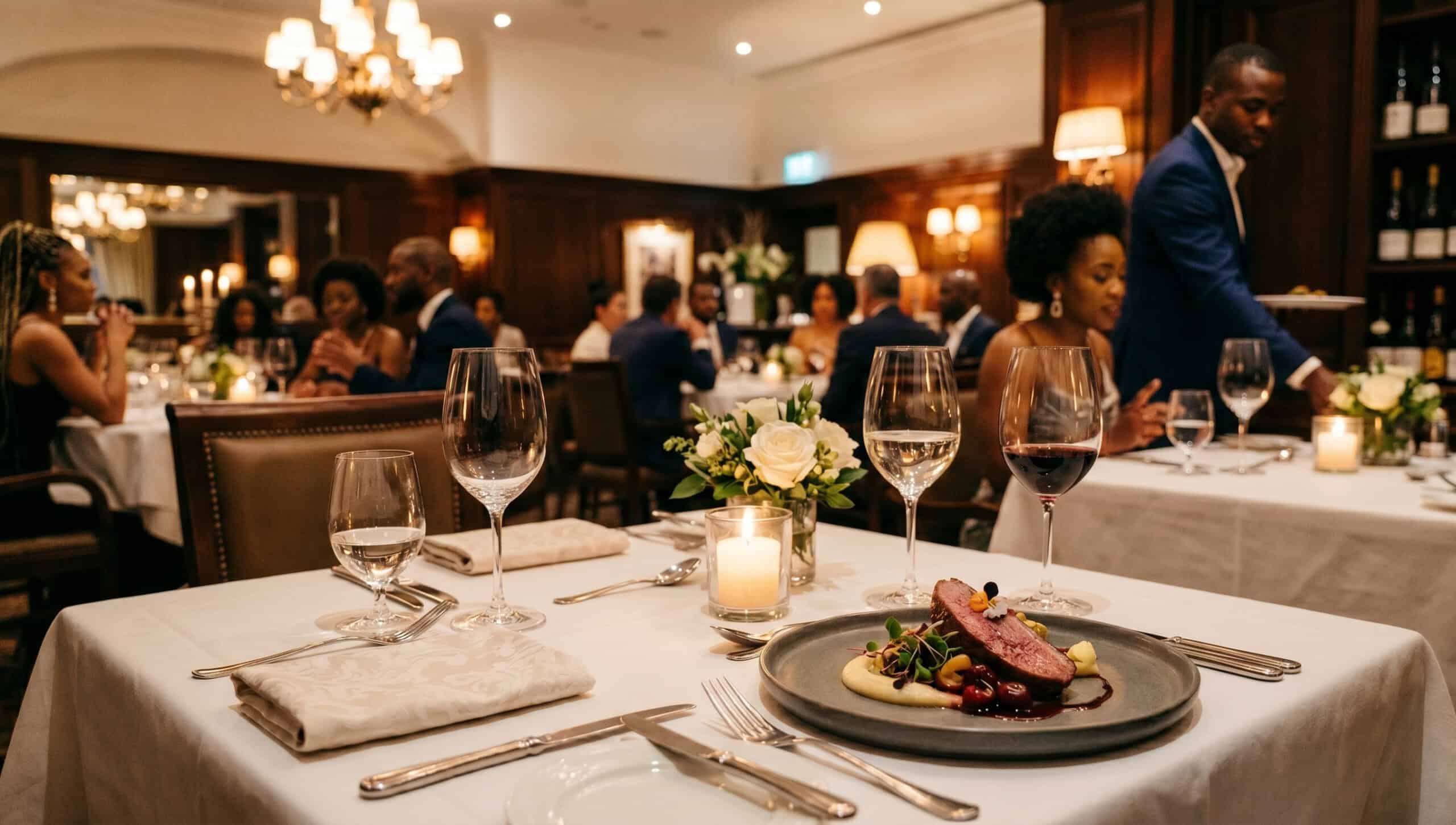
If you’re sitting in a high-end restaurant in London, New York, or Tokyo, you are likely paying three times more for a meal that is, frankly, half as creative as what you’ll find in a converted warehouse or a historic roundhouse in Cape Town. It’s a bold claim, but anyone who has spent a week eating their way through the Mother City knows it’s the absolute truth. Cape Town has managed to do something that traditional culinary capitals have struggled with for decades: it has made the multi-course tasting menu feel less like a stuffy religious ceremony and more like a high-energy evening at a friend’s (very wealthy, very talented) house.
The city’s chefs aren’t interested in the silent, white-tablecloth service of the past. Instead, they are leaning into a style of cooking that is obsessed with “terroir”—the specific taste of the fynbos-covered mountains and the ice-cold Atlantic. You aren’t just getting a meal; you’re getting a crash course in South African biodiversity, served with a casual, coastal swagger that makes European fine dining feel prehistoric. If you want to see where the global culinary needle is actually moving, you need to book a seat at these five institutions.
The Urban Mastery of FYN
Located on the fifth floor of a sleek building in the city bowl, FYN is probably the most visually arresting restaurant in the country. Before you even taste the food, you’re hit by the “Neisha” architecture—a ceiling made of thousands of hanging wooden blocks that mimic a forest canopy. It’s a bold, Japanese-inspired aesthetic that sets the stage for what Peter Tempelhoff and his team are doing in the kitchen.
The menu here is a masterclass in “South-African-Japanese” fusion. Think Cape abalone served with shiso and dashi, or local springbok paired with Japanese plum. It sounds like it shouldn’t work, but it does, mainly because they don’t force the fusion. They understand that the acidity and precision of Japanese technique are the perfect foil for the heavy, rich flavors of South African game and seafood.
The open kitchen is the heart of the room. There are no walls between you and the chefs, which creates a sense of transparency that is refreshing. You get to watch the plating process, which is done with the kind of surgical precision you’d expect in Kyoto. It’s high-pressure, high-reward dining that feels completely integrated into the urban energy of the city.
Key Takeaway: FYN is the gold standard for global fusion, offering a sophisticated, boundary-pushing menu that successfully marries Japanese technique with South African ingredients.
History and Rebellion at Salsify
If you drive up toward [suspicious link removed] in Camps Bay, you are heading toward a building with a lot of baggage. It was originally a hunting lodge for Lord Charles Somerset in the early 1800s, and it sits on a patch of land with some of the best views of the Atlantic Ocean in the world. For years, it was a traditional, slightly stiff establishment. Then came Salsify.
Chef Ryan Cole has taken this historic space and injected it with a heavy dose of modern rebellion. The walls are covered in avant-garde graffiti and modern art, contrasting sharply with the original wooden beams and thick stone walls. The food follows suit. Cole is a fisherman at heart, and his “ocean-to-plate” philosophy is the backbone of the menu.
You might start with a delicate piece of sea bass and end with a complex, multi-layered dessert that utilizes local fynbos honey. The service is impeccably professional but avoids the “sir/madam” stuffiness that usually plagues historic venues. It’s the kind of place where you can feel the weight of history in the architecture while eating food that is firmly rooted in the future.
Key Takeaway: Salsify at the Roundhouse is a masterclass in contrasts, blending a historic, high-altitude setting with a daring, seafood-centric menu that defies traditional expectations.
Waterfront Elegance at PIER
The V&A Waterfront is often dismissed by locals as a tourist trap, but PIER has single-handedly changed that narrative. Located in the Pierhead Building, it’s a quiet, white-on-white sanctuary that feels miles away from the buskers and shoppers outside. This is “destination dining” in every sense of the word.
The focus here is almost entirely on the ocean. Because you are sitting just a few meters from the harbor, there is a literal connection between the view and the plate. The multi-course experience is theatrical but never gimmicky. You might have a dish finished at your table with a pour of aromatic broth, or a piece of nitrogen-chilled fruit that cleanses your palate before the main event.
What sets PIER apart is the level of refinement. Every element, from the bespoke ceramics to the way the sunlight hits the water, has been considered. It is a slow, methodical meal that demands your full attention. If you’re looking for the most polished, luxurious version of the Cape Town tasting menu, this is it.
Key Takeaway: PIER offers a world-class, intimate seafood experience that leverages its harbor-side location to provide an incredibly fresh and theatrical dining journey.
The Intimate Rebel Known as Belly of the Beast
On the opposite end of the spectrum is Belly of the Beast. There is no choice here. There is no menu to look at beforehand. You book a seat, you show up, and you eat whatever the chefs have decided to cook that day. It is a 24-seat room that feels more like a workshop than a dining room, and it is consistently one of the hardest tables to book in the city.
This “no-choice” model allows the chefs to focus on zero-waste and hyper-seasonal ingredients. If a local farmer brings in a specific crop of mushrooms or a hunter has a particular piece of venison, that’s what’s on the menu. This creates an incredibly honest dining experience. You are at the mercy of the seasons and the chefs’ creativity.
The atmosphere is loud, casual, and intensely focused. You’re sitting close to your neighbors, and the chefs often come out to explain the dishes themselves. It’s a “nose-to-tail” philosophy that isn’t afraid to use offal or unusual cuts of meat. If you’re a fussy eater, this isn’t for you. But if you want to see the raw, unedited heart of the Cape Town food scene, this is the most authentic seat in town.
Key Takeaway: Belly of the Beast is a daring, intimate establishment that eschews traditional menus in favor of a hyper-seasonal, chef-led experience that prioritizes honesty and zero-waste.
The Grand Theatre of La Petite Colombe
While the original location was in Franschhoek, the move to the [suspicious link removed] has only solidified La Petite Colombe as a powerhouse of South African dining. Situated on the Silvermist Wine Estate, it offers a view of the rolling vineyards that feels like something out of a dream.
Eating here is a theatrical event. It is a long, multi-hour journey that often includes “interactive” courses where you might have to find a hidden snack in a forest-themed centerpiece or choose your own knife for a specific course. It could easily feel like “over-the-top” gimmickry, but the flavors are so solid that it never does.
The technique is unmistakably French, but the soul is entirely local. They have a way of taking a humble ingredient like a charred leek or a local scallop and elevating it to something that feels monumental. It is consistently ranked among the best restaurants in the world, and once you’ve spent an afternoon there, it’s easy to see why. It is the pinnacle of the “experience” economy—a meal you will still be talking about five years from now.
Key Takeaway: La Petite Colombe is a spectacular blend of high-concept theatre and elite French technique, making it the must-visit destination for anyone seeking a truly memorable culinary event.
How to Successfully Navigate the Scene
If you’re planning to hit these spots, you need a strategy. This isn’t the kind of city where you can just walk in and hope for the best. The high-end food scene here is incredibly popular, and the booking windows are competitive.
- The Booking Window: Most of these restaurants open their bookings three months in advance. For spots like FYN or La Petite Colombe, you need to be online the minute those slots open. If you’re coming for the summer season, plan your dinners before you plan your flights.
- Dietary Requirements: Unlike some European fine-dining spots that can be a bit precious about changes, Cape Town chefs are generally very accommodating. However, you must inform them at least 48 hours in advance. Because these are “set” menus, they need time to prepare bespoke alternatives.
- Wine Pairings: Don’t skip the pairing. South Africa is currently producing some of the most exciting wines in the world, and these restaurants have access to small-batch labels you simply won’t find in a retail store. The sommeliers are often just as talented as the chefs.
- Stamina: These meals can last anywhere from three to five hours. Don’t book a late-night show or a sunrise hike for the next morning. Give yourself the space to actually enjoy the experience.
Cape Town’s food scene is a dialogue between the land and the people who live here. It’s a city that is finally realizing its potential as a global culinary leader, and the best part is that it’s doing it on its own terms. It doesn’t need to look like Paris or London anymore; it’s perfectly happy sounding like Cape Town.