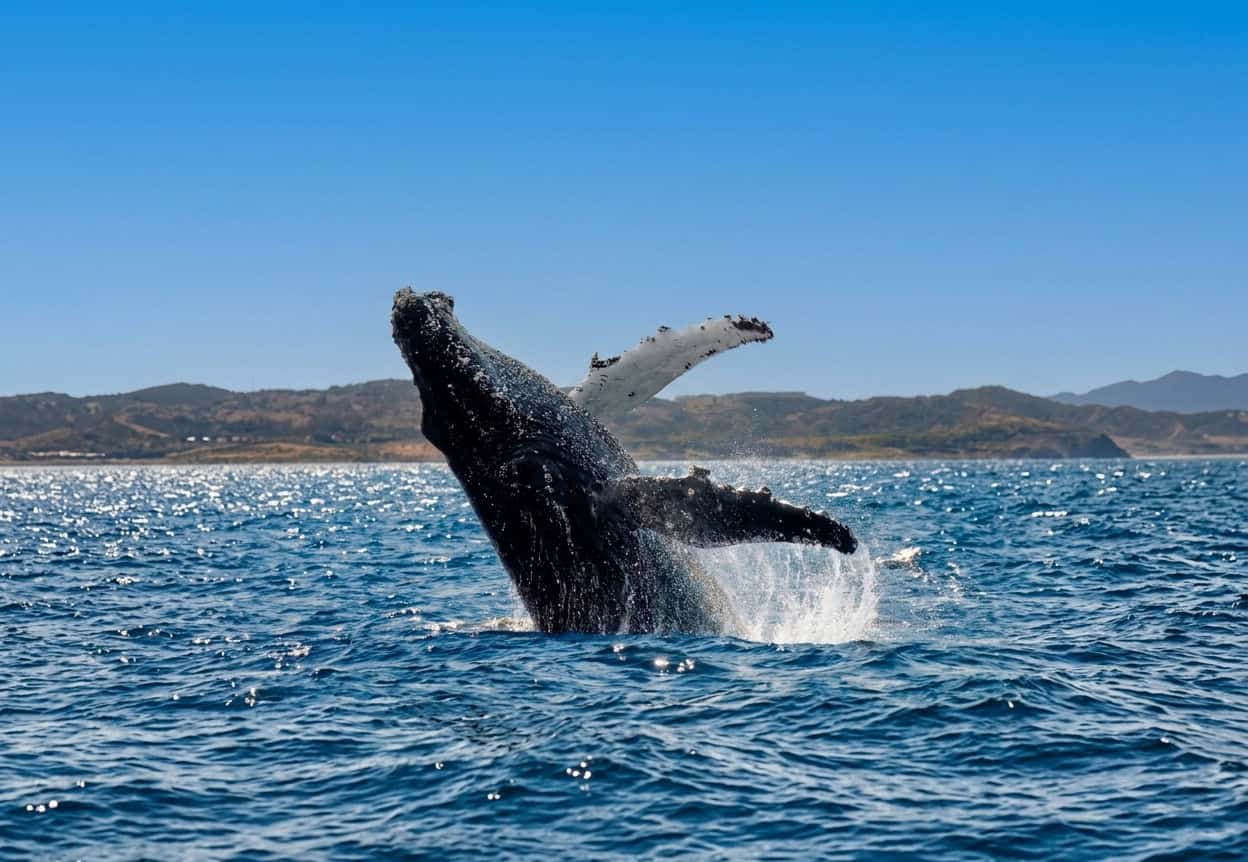
There is a specific, heart-stopping moment that happens every year along the South African coast. You’re standing on a salt-sprayed cliff, the wind is whipping through your hair, and then you see it—a sudden, misty “V” of water shooting into the air. Then comes the slow, rhythmic roll of a dark, barnacled back, or perhaps the thunderous slap of a massive tail hitting the surface. The Southern Right whales have returned.
For many, the first instinct is to head straight to the famous “whale capital” of the world, but let’s be honest: sometimes you want the majesty of the whales without the bustle of the crowds. There is something deeply personal about finding a quiet stretch of shoreline where it’s just you, the fynbos, and a forty-ton mammal breaching a hundred meters away. If you are looking to escape the usual tourist hotspots and find a more intimate connection with these gentle giants, the Western Cape has some spectacular alternatives that offer front-row seats to the greatest show on earth.
From the dramatic, twisting mountain passes of the R44 to the remote, white-sand dunes of the Overberg, here is where you should be pointing your binoculars between June and November.
The Dramatic Cliffs of Clarence Drive
If I only had one afternoon to show someone the beauty of the Cape coastline, I would take them on Clarence Drive. This stretch of the R44, which winds between Gordon’s Bay and Rooiels, is often cited as one of the most scenic drives in the world, and for good reason. It clings to the side of the Hottentots Holland Mountains, offering a bird’s-eye view of the vast False Bay.
During whale season, this road becomes a high-altitude scouting ground. The beauty here is in the elevation. Because you are perched so high above the water, you can often spot the dark shapes of whales moving through the turquoise shallows long before they even surface. There are numerous gravel pull-offs where you can safely park and set up a picnic. I’ve spent many hours at the Sparks Bay area, just watching the horizon. It’s not uncommon to see multiple pairs of mothers and calves resting in the calmer waters protected by the kelp forests.
- The Best Strategy: Keep your eyes peeled for “sailing”—a behavior where whales lift their tails out of the water to catch the wind.
- A Pit Stop: If you need a break from the wind, The Grille Shack is a fantastic retro-styled pit stop right on the route. It’s got that classic “road trip” feel that perfectly complements a day of coastal exploring.
- The Vibe: This is for the road-tripper. It’s about the journey as much as the destination, with every turn offering a new perspective of the bay.
Key Takeaway: Clarence Drive offers elevated, panoramic views of False Bay, making it easy to spot multiple pods of whales from the safety of scenic mountain pull-offs.
The Untamed Wilderness of De Hoop Nature Reserve
If you are looking for the absolute pinnacle of land-based whale watching, you have to go to De Hoop Nature Reserve. It’s about a three-hour drive from Cape Town, but the moment you hit the gravel roads leading into the reserve, you realize you’ve entered a different world. This is a massive Marine Protected Area, and it serves as one of the most important nurseries for Southern Right whales in the Southern Hemisphere.
The best spot within the reserve is Koppie Alleen. Imagine standing on massive, pristine white sand dunes that overlook a clear blue ocean. I’ve stood there and counted over fifty whales in a single glance. Because the water is so protected here, the mothers bring their calves very close to the shore to rest and play. You can hear them blowing and splashing even over the sound of the wind. It is, quite simply, a spiritual experience.
- Staying Over: If you want to wake up to the sound of whales, the De Hoop Collection offers a variety of accommodation options right inside the reserve.
- The Whale Trail: For the more adventurous, there is a multi-day hiking trail that follows the coast. Even if you don’t do the whole hike, the day walks along the boardwalks are spectacular.
- What to Pack: Bring high-quality binoculars and a decent camera, but don’t forget a windbreaker. The dunes can get quite breezy, even on a sunny day.
Key Takeaway: De Hoop is the ultimate “nursery” experience, where you can witness hundreds of whales in an untouched, protected wilderness setting.
The Limestone Caves of De Kelders
Just a short drive past the shark-diving hub of Gansbaai lies the quiet village of De Kelders. The name translates to “The Cellars,” referring to the incredible limestone caves that riddle the coastline here. This is perhaps the most underrated whale-watching spot in the country.
What makes De Kelders unique is the depth of the water right against the cliffs. Unlike other spots where the whales might be a few hundred meters out, here they often swim within ten or twenty meters of the rocks. I’ve sat on the benches along the cliff path and felt the spray from a whale’s blow. It’s that close. You can also explore the Klipgat Cave, where archaeological remains dating back tens of thousands of years were found, providing a hauntingly beautiful backdrop to your whale spotting.
- The Cliff Path: There is a well-maintained path that runs along the edge of the town. It’s flat, easy to walk, and dotted with benches.
- The Geography: The cliffs provide a natural amphitheater. The sound of a whale breaching in this bay echoes off the rocks in a way that is truly bone-shaking.
- The Quiet: Unlike more famous towns nearby, De Kelders remains a sleepy residential area. You’ll find more locals walking their dogs than tour buses here.
Key Takeaway: De Kelders provides the most intimate, up-close encounters due to the deep water running directly alongside its dramatic limestone cliffs.
The Secret Nursery at Witsand
Located at the mouth of the Breede River, Witsand is often called the “Whale Nursery of South Africa.” It sits on the edge of St. Sebastian Bay, which historically sees the highest concentration of whale calves on the coast. Because the bay is so sheltered, it is the preferred “delivery room” for the Southern Rights.
What I love about Witsand is the lack of commercialism. There are no boat-based whale watching permits allowed in this bay to ensure the mothers and calves aren’t disturbed. This means the only way to see them is from the shore, and they reward your patience by coming remarkably close. There is a dedicated whale-watching platform that offers a great vantage point, but honestly, just walking along the 4km of white sandy beach is usually enough to find a spectacular sighting.
- The Breede River: The interaction between the river mouth and the ocean creates a rich ecosystem. You might even see bull sharks or dolphins while you’re hunting for whale spouts.
- The Experience: It’s a bit of a trek to get there, but that’s the point. It’s peaceful, quiet, and feels like a secret that only the locals know.
- Timing: Early morning is best, as the light hits the water at an angle that makes it easier to spot the dark shapes of the whales.
Key Takeaway: Witsand offers a peaceful, non-commercial environment focused entirely on the protection and observation of mother whales and their calves.
False Bay Vantage Points Closer to the City
If you don’t have the time for a multi-hour drive, the False Bay coastline right on Cape Town’s doorstep is surprisingly productive. You just need to know where to look. While Muizenberg is great for surfing, if you head slightly further along the mountain, you’ll find Boyes Drive.
This elevated road runs above Kalk Bay and St. James. There are several spots where you can pull over—look for the “Shark Spotters” sitting under their green umbrellas. They are often the first to see the whales and are usually happy to point them out to you. If you prefer to be at sea level, the “Catwalk” (the coastal path between St. James and Kalk Bay) is a lovely, flat walk where whales often frolic just beyond the tidal pools.
- Cape Point: If you are visiting the Cape of Good Hope, don’t just look at the lighthouses. The high cliffs near the Two Oceans Restaurant are fantastic for spotting whales entering False Bay.
- Victoria Road: On the Atlantic side, the stretch between Llandudno and Hout Bay often sees Humpback whales migrating. The Twelve Apostles Hotel and Spa has a terrace that is arguably the most luxurious place in the city to sip a coffee while watching whales breach.
Key Takeaway: You don’t have to travel far; the elevated viewpoints of Boyes Drive and the rugged cliffs of Cape Point offer excellent sightings within an hour of the city center.
Essential Tips for the Perfect Sighting
Whale watching is a bit like a game of hide-and-seek with a forty-ton opponent. To make sure you win, there are a few things to keep in mind:
- Look for the “Blow”: Don’t look for the whale’s body first. Look for the mist. On a calm day, the spray from a blowhole can shoot several meters into the air and linger for a few seconds.
- Polarized Sunglasses: These are a game-changer. They cut the glare on the surface of the water, allowing you to see the dark shapes of the whales beneath the waves.
- Patience is a Virtue: A whale can stay submerged for up to twenty minutes. If you see a blow and then nothing for a while, don’t give up. They are likely just taking a nap or exploring the depths.
- Check the Wind: Whales tend to be more active (breaching and tail-slapping) when there is a bit of a breeze, but a flat, calm sea makes it much easier to spot their silhouettes.
A Perspective-Shifting Experience
The magic of the Western Cape is that these ancient creatures choose our shores every year to bring new life into the world. Whether you find yourself on a lonely dune in De Hoop or a busy cliff path in De Kelders, take a moment to put down the phone, breathe in the salt air, and just watch. It’s a perspective-shifting experience that reminds you just how big and wondrous our world really is.