If you’ve ever stood on the pier at the V&A Waterfront and looked out toward the horizon, you know that the Atlantic Ocean has a very specific kind of energy. It’s cold, restless, and incredibly powerful. But just a few steps away from the bustling shops and the sounds of street performers, there is a place where that energy is bottled into something quiet, contemplative, and utterly mesmerizing. Stepping into the Two Oceans Aquarium feels less like visiting a tourist attraction and more like slipping beneath the surface of the world itself.
I’ve always found that the best way to experience the Aquarium is to go when you aren’t in a rush. It’s a space that rewards the slow wanderer. While many people see it as a rainy-day backup plan or a way to keep the kids entertained for an hour, it is actually one of the most sophisticated marine education centers in the Southern Hemisphere. It sits at the literal and metaphorical meeting point of two of the world’s most influential bodies of water—the Atlantic and the Indian Oceans—and the exhibits reflect that incredible biological diversity.
A Blue Escape in the Heart of the Waterfront
The journey begins in the Diversity Gallery, which acts as a perfect introduction to the contrasting worlds of South Africa’s coastline. On one side, you have the icy, nutrient-rich waters of the Atlantic, home to cryptic fish and translucent jellies that look like they belong in a sci-fi film. On the other, the warm, vibrant Indian Ocean brings a burst of color with tropical beauties and the ever-popular Western clownfish.
I love starting here because it resets your perspective. You move from the high-decibel environment of the V&A Waterfront into a world of muffled silence and blue light. It’s an immediate mood shifter. Whether you’re watching an octopus navigate its tank with alien grace or marveling at the delicate structure of a seahorse, there’s a sense of wonder that hits you before you even reach the “big” tanks.
- The Jelly Gallery: Don’t skip the jellies. They are displayed in specialized tanks that keep them suspended in a constant current. Watching them pulse against the neon lights is arguably the most meditative experience in the entire city.
- The Microscope Exhibit: This is often overlooked, but it is a fascinating stop. It allows you to see the “small stuff”—the tiny polyps and creatures that form the foundation of the marine food chain.
Key Takeaway: The Two Oceans Aquarium is more than a display of fish; it is a carefully curated journey through the two distinct marine ecosystems that define the South African coast.
Walking Through a Living Kelp Forest
If I had to pick one favorite spot in the entire building, it would be the Kelp Forest Exhibit. It is one of only a handful of living kelp forest displays in the world, and there is something profoundly peaceful about it. Giant sea bamboo grows from the floor toward the surface, swaying in a simulated surge that mimics the movement of the ocean.
As the light filters down through the fronds, it creates a dappled effect that is almost hypnotic. You’ll see large white musselcrackers and local fish species gliding through the algae like birds through a forest. It’s a uniquely South African sight. Most people don’t realize that kelp forests are just as important to the planet’s health as rainforests, producing massive amounts of oxygen and providing a nursery for countless species.
- Feeding Times: If you can, time your visit for Tuesday, Thursday, or Sunday at 12:00 PM. Watching the divers enter this underwater forest to hand-feed the fish is a highlight.
- Hidden Residents: Keep an eye out for the shy sharks that live on the bottom, like the pyjama catshark with its distinctive stripes.
Key Takeaway: The Kelp Forest Exhibit offers a rare, tranquil glimpse into an ecosystem that is usually hidden beneath the cold Atlantic swells.
The 10-Metre Tunnel and the World of Rays
One of the most iconic experiences at the Aquarium is the I&J Ocean Exhibit. This massive 1.6-million-liter tank is home to a breathtaking array of stingrays, turtles, and large predatory fish. The centerpiece is a 10-meter-long transparent tunnel that allows you to walk right through the middle of the tank.
There is nothing quite like the feeling of a giant short-tail stingray gliding directly over your head, its pale underside looking remarkably like a smiling face. It’s an immersive experience that truly makes you feel like a guest in their world. You’ll often find people sitting on the floor of the tunnel, just staring up in silence. It’s a great place to lose track of time.
- The Resident Turtles: You’ll likely spot several large sea turtles, many of which are part of the aquarium’s extensive rehabilitation program.
- Feeding Frenzy: On Mondays, Wednesdays, and Fridays at 12:00 PM, the rays are hand-fed by scuba divers, which is a fantastic opportunity to see these massive “pancakes of the sea” in action.
Key Takeaway: The I&J Ocean Exhibit’s tunnel is the ultimate immersive marine experience, offering a 360-degree view of life in the warmer Indian Ocean waters.
Meeting the Misunderstood Residents of the Shark Exhibit
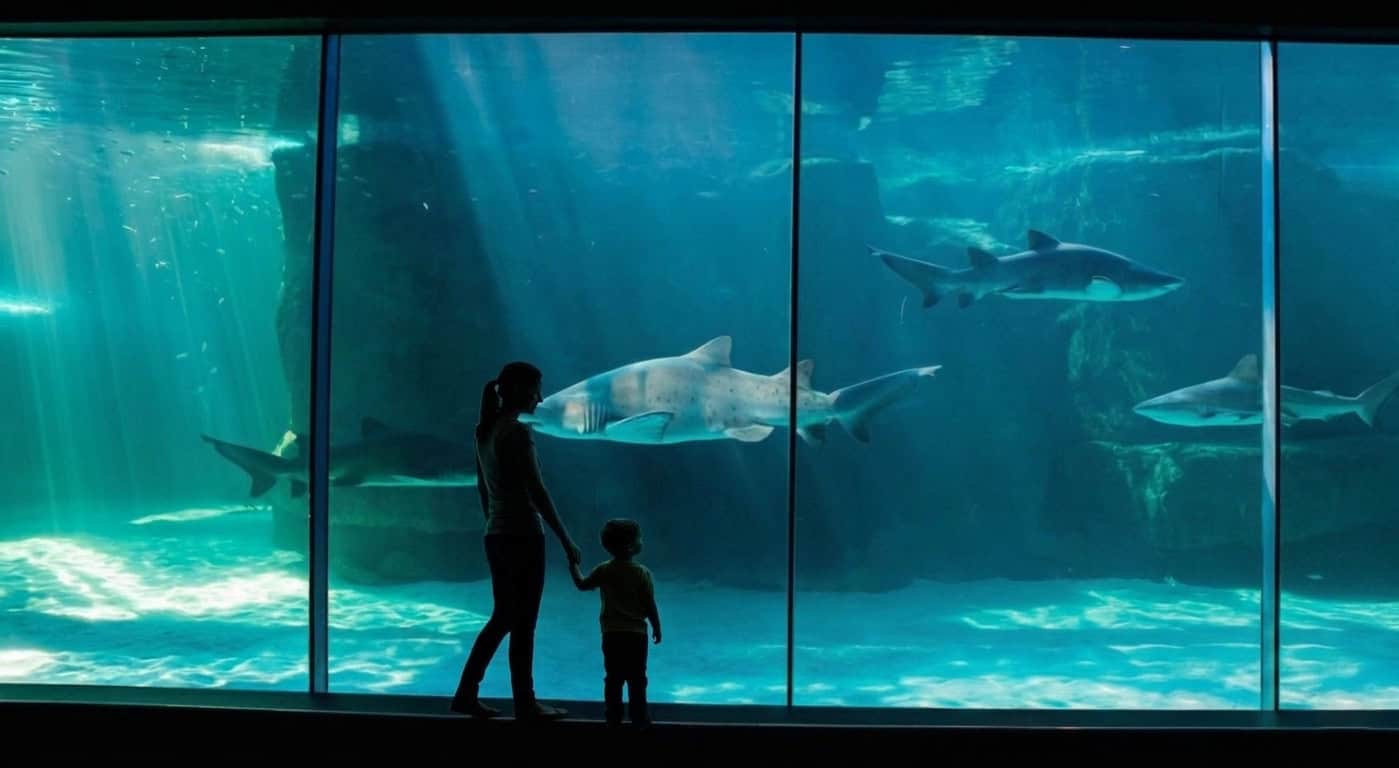
For many, the Save Our Seas Foundation Shark Exhibit is the main draw. It houses a shiver of ragged-tooth sharks—ancient-looking predators with rows of needle-sharp teeth that always seem to be on display. Despite their fearsome appearance, “raggies” are actually quite docile and slow-moving.
Watching them cruise effortlessly past the massive viewing window is a lesson in power and efficiency. The exhibit is designed to educate visitors about the importance of shark conservation and to dispel the “Jaws” myths that have plagued these animals for decades. You’ll also see schools of yellowtail and massive rockcod that hold their own against their shark neighbors.
- Shark Feedings: These happen on Saturdays at 12:00 PM. It’s a controlled, educational demonstration that shows how specialized these predators are.
- The Ramp: The exhibit features a spiral viewing ramp that allows you to see the sharks from multiple depths and angles as you move through the building.
Key Takeaway: The shark exhibit focuses on education and conservation, showing the beauty and necessity of these vital apex predators.
Waddle This Way for the Penguin Colony
No visit to the Aquarium is complete without stopping by the Penguin Exhibit. This area is home to two very different species: the charismatic African penguins and the quirky Northern rockhopper penguins. The African penguins, with their distinctive braying sound (hence their “jackass penguin” nickname), are a local treasure but are unfortunately listed as endangered.
The exhibit mimics a riverine environment and a coastal rocky shore, providing a glimpse into the lives of these flightless birds. They are endlessly entertaining to watch, whether they are zooming through the water like feathered torpedoes or sunning themselves on the rocks.
- Daily Feedings: These are a must-see! They happen daily at 11:30 AM and 2:30 PM. The keepers know each penguin by name and personality, and the banter during the feeding sessions is both funny and educational.
- #NotOnOurWatch: This is the campaign spearheaded by the Two Oceans Aquarium Foundation to raise awareness about the plight of the African penguin. It’s worth stopping to read about how we can help protect their dwindling numbers in the wild.
Key Takeaway: The penguins are the undisputed stars of the show, combining adorable antics with a powerful message about local conservation.
Take the Plunge With a Scuba Diving Experience
If looking through the glass isn’t enough for you, why not get in the water? The Two Oceans Aquarium Dive School is a certified PADI facility that offers a variety of experiences for both beginners and pro divers.
Imagine diving into the Kelp Forest or the I&J Ocean Exhibit and being surrounded by rays and sharks. For those who aren’t certified divers, they offer “Discover Scuba” courses that get you in the water safely under expert supervision. It is arguably one of the most unique things you can do in Cape Town.
- The Experiences: You can choose to dive with the sharks (no cages needed for these raggies!) or explore the temperate waters of the kelp forest.
- The Gear: Everything is provided on-site, so you just need to bring your sense of adventure.
Key Takeaway: Scuba diving at the aquarium provides a literal “deep dive” into marine life that most visitors only ever see through the glass.
Marine Conservation and the Turtle Rescue Mission
One of the things I respect most about this institution is that it isn’t just a place to look at animals; it is a working hospital for the ocean. The Two Oceans Aquarium Foundation runs a world-class Turtle Conservation Centre. Every year, especially during the stormy winter months, hundreds of tiny turtle hatchlings are washed up on the Western Cape’s beaches, far from their warm-water homes.
These “stragglers” are brought to the Aquarium, where they are rehabilitated, fed, and eventually released back into the wild. Watching the progress of these tiny survivors is incredibly moving. They also lead the way in seal disentanglement and marine wildlife management in the busy harbor area.
- The Impact: When you buy a ticket, you are directly supporting these rescue and rehabilitation efforts.
- Behind the Scenes: Look out for the “behind-the-scenes” tours if you want to see the labs and the nurseries where the real conservation work happens.
Key Takeaway: Your visit supports a massive conservation effort that rescues hundreds of marine animals every year, making it a “feel-good” experience for every visitor.
Tips for Making the Most of Your Visit
- The After 3 Special: If you’re visiting during the school term, keep an eye out for the “After 3 Special.” It offers a discounted rate for late-afternoon entry, which is perfect for a quick post-work or post-school visit.
- Celebrate Your Birthday: South African citizens can enjoy free entry to the Aquarium on their birthday (or any day in their birthday month!). Just remember to bring your valid ID.
- Construction Update: The Aquarium is currently undergoing some exciting upgrades (starting in mid-2025) to expand the penguin exhibit and build a brand-new children’s center. Don’t worry—they remain open seven days a week.
- The Gift Shop: Known as “Booty,” the gift shop is actually one of the best places in the Waterfront to find high-quality, eco-friendly gifts and marine-themed souvenirs.
- Official Info: Always check the Two Oceans Aquarium official website for the most current feeding times and any special events or temporary closures.
Why We Keep Coming Back
The ocean is the heart of Cape Town. It defines our weather, our food, and our weekend plans. The Two Oceans Aquarium is the place where that relationship is celebrated and explored. Whether you are six years old and seeing a shark for the first time, or an adult looking for a moment of peace in a busy city, the blue halls of the aquarium offer something essential.
It reminds us that we are part of a much larger, much more mysterious world. It’s a place of science, yes, but it’s also a place of pure, unadulterated magic. Next time the wind is blowing too hard for the beach or you just need a break from the noise of the city, head down to the wharf and dive into the quiet wonder of the two oceans.