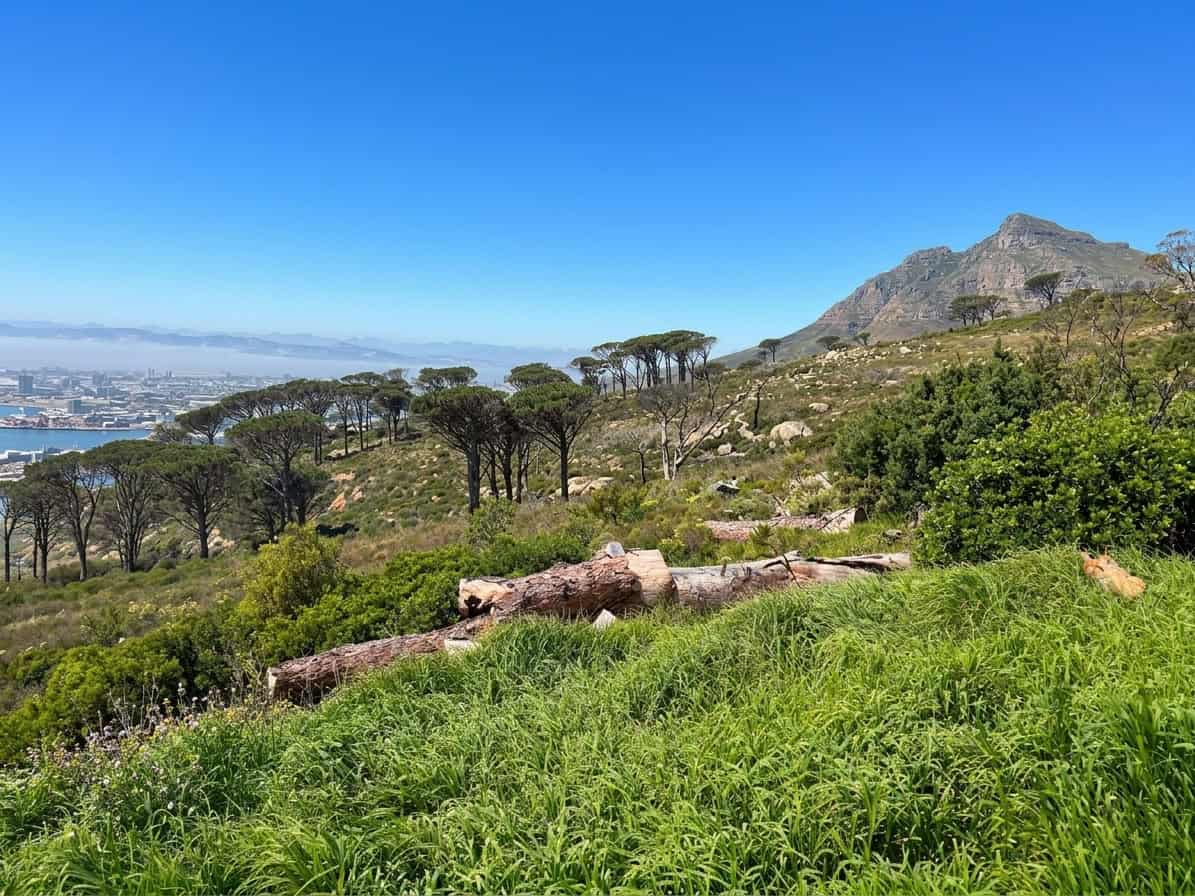
You know those days when you desperately crave the sweeping, cinematic views of a mountain peak, but your legs are absolutely not interested in a 600-meter vertical scramble? We’ve all been there. Cape Town is famous for its grueling climbs like Skeleton Gorge or India Venster, but there is one legendary route that offers all the “main character” energy of a summit hike without the soul-crushing incline.
The Pipe Track is, quite simply, the ultimate “reward-to-effort” trail in the Mother City. It contours gracefully along the Atlantic side of Table Mountain, hugging the base of the majestic Twelve Apostles. It’s a favorite for trail runners, dog walkers, and sunset chasers alike. This path is a journey through Victorian engineering history, diverse fynbos, and some of the most enviable ocean views on the planet.
If you’re looking for a route that allows you to actually hold a conversation while you hike—rather than just panting heavily at your shoes—the Pipe Track is your sanctuary.
A Walk Through Victorian Engineering History
Before it was a world-class hiking trail, the Pipe Track was a functional service road. To understand why it’s there, we have to look back to the late 1800s. Cape Town was growing rapidly, and the city’s water needs were outstripping its supply. An engineer named Thomas Stewart was tasked with a massive project: building the Woodhead and Hely-Hutchinson reservoirs on the top of Table Mountain.
The Pipe Track was constructed in 1887 to lay the pipeline that would bring water from those high-altitude dams down to the Molteno Reservoir in Oranjezicht. As you walk, you can still see sections of the massive iron piping peeking through the earth or crossing over small ravines. You aren’t just walking on a dirt path; you’re walking on a lifeline that quite literally allowed the city of Cape Town to survive and expand.
- The Visionary: Thomas Stewart is the man we have to thank for the path’s incredible contouring.
- The Route: The pipeline runs from the Disa River on the mountain’s “back table” all the way to the city bowl.
- The Remnants: Look out for the old stone manholes and the weathered iron valves along the side of the trail.
Key Takeaway: The Pipe Track is a historic engineering marvel dating back to 1887, originally built to transport water from the mountain’s peaks to the growing city below.
Navigating the Starting Line and Initial Ascent
The most common starting point is the Kloof Nek Parking, right at the intersection of Tafelberg Road and the road leading down to Camps Bay. It’s a busy spot, so if you’re planning a weekend hike, try to get there early to snag a space.
The very beginning of the trail is actually the hardest part. There is a short, steep set of stone stairs that leads you up from the road to the level of the pipeline. Once you reach the top of those stairs, the trail levels out significantly, and the real magic begins.
As you round the first corner, the “City Bowl” side of the mountain disappears, and you are suddenly staring directly at the back of Lions Head. To your right, the Atlantic Ocean stretches out toward the horizon, usually dotted with a few whitecaps and the occasional passing ship.
- Ease of Access: The trail is exceptionally easy to follow; there is almost no chance of getting lost as long as you stay on the wide, well-worn path.
- The Terrain: While mostly flat, the path is rocky and uneven in places. A pair of decent sneakers or trail shoes is a much better choice than flat-soled fashion shoes.
- The Turn-Offs: You’ll see a few paths heading steeply up the mountain to the left. These lead to more advanced climbs like Diagonal Trail; unless you’re prepared for a vertical mission, stick to the flat track!
Key Takeaway: After a brief set of stairs at the Kloof Nek start, the trail levels out into a wide, accessible path that offers immediate, breathtaking views of Lions Head and the Atlantic Ocean.
Exploring the Ravines and the Twelve Apostles
One of the most beautiful aspects of the Pipe Track is how it ducks in and out of the “folds” of the mountain. These are the ravines that separate the peaks of the Twelve Apostles. Each time the path curves into a ravine, the temperature drops slightly and the vegetation becomes lusher.
About twenty minutes into the walk, you’ll reach a spot locals call “Die Middelmannetjie.” It’s a slightly elevated section of the path that provides a perfect 360-degree view. To your left are the towering sandstone cliffs of the Apostles; to your right is the shimmering sprawl of Camps Bay and Bakoven.
- Die Diedle: A narrow, shaded cleft in the rock.
- Kasteelspoort: This is one of the most famous intersections on the mountain. If you stay on the Pipe Track, you’ll pass under the old cableway ruins.
- Woody Ravine: A lush, forested area that feels like a tiny jungle hidden on the side of the mountain.
- The Flora: The Pipe Track is a fantastic place to spot Proteas and Leucadendrons within the Cape Floral Kingdom.
- Wildlife: Keep an eye out for “Dassies” (Rock Hyrax) sunning themselves on the rocks. Their closest living relative is actually the elephant!
- The Overhangs: In several places, the mountain literally hangs over the path, providing natural shade and dramatic photo opportunities.
Key Takeaway: The trail weaves through the dramatic ravines of the Twelve Apostles, offering a shifting landscape of rocky overhangs, lush vegetation, and hidden historical ruins.
Timing Your Hike for the Golden Hour
While you can hike the Pipe Track at any time, there is a reason why locals flock here in the late afternoon. As the sun begins to dip toward the Atlantic, the sandstone cliffs of the Twelve Apostles turn a fiery shade of orange and pink. Because the trail faces west, it receives the full glory of the afternoon sun.
I always suggest starting about two hours before sunset. This gives you plenty of time to walk as far as you like and make it back to the Kloof Nek side just as the sky begins to turn purple. Watching the lights of Camps Bay flicker on far below while you are still perched on the mountain is a core Cape Town memory.
- Sun Safety: If you go earlier, a hat and high-SPF sunscreen are non-negotiable. There is almost zero shade on this trail during the heat of the day.
- The Wind: The “South Easter” wind can howl along this side of the mountain. If the “tablecloth” clouds are pouring over the top, expect a very windy walk.
- The Photography: The “Golden Hour” here is unparalleled. The light hitting the jagged edges of the Apostles is a photographer’s dream.
Key Takeaway: The Pipe Track is Cape Town’s premier sunset trail, but its western exposure means you must be prepared for intense sun in the morning and afternoon.
Practical Logistics and Safety Tips
The beauty of the Pipe Track is its accessibility, but Table Mountain should never be underestimated. If you don’t want to start at Kloof Nek, an alternative entrance is via Theresa Avenue in Camps Bay. This involves a steeper climb to reach the Pipe Track but offers easier parking during peak season.
After your hike, you can grab a sophisticated meal at The Roundhouse or keep it casual with some outdoor drinks at The Lawns at the Roundhouse, which sits just below the start of the trail.
- Water: There are no water taps along the trail. Carry at least one liter per person.
- Visibility: If a thick mist rolls in, visibility can drop to a few meters very quickly. If you aren’t familiar with the path, it’s best to turn back.
- Security: It’s always recommended to hike in groups of two or more and to avoid carrying excessive valuables. Stay aware of your surroundings.
- Check the Status: Check the SANParks Table Mountain official page for trail closures or emergency contact numbers.
Key Takeaway: Whether you start at Kloof Nek or Theresa Avenue, always carry sufficient water and remain mindful of the rapidly changing mountain weather.
Why the Pipe Track Remains a Local Legend
There is something deeply democratic about the Pipe Track. On any given evening, you’ll see elite athletes training alongside families out for their evening stroll. It’s a trail that asks very little of you but gives back an immense amount of beauty. It connects the industrial past of the city to the wild, natural future of the mountain. It’s a place to think, a place to breathe, and—most importantly—a place to watch the sun go down on one of the most beautiful corners of the world.