If you’ve ever lived in the City Bowl, or even just spent a Saturday morning navigating the winding streets of Oranjezicht and Vredehoek, you know that the skyline is dominated by a few very specific landmarks. There is, of course, the grand flat top of Table Mountain. There are the three “pepper pot” towers of Disa Park. And then, standing resolutely at the foot of the hill, there is the Gardens Shopping Centre.
To the casual tourist, it might just look like a sturdy, slightly retro high-rise with a mall at its base. But to a local, “The Gardens Centre” is a way of life. It is the neighborhood’s communal living room. It is the place where you see your neighbor in their morning slippers grabbing a baguette, where local creative directors have “accidental” meetings over espresso, and where the history of Cape Town’s urban development is written into the very concrete of the walls. Have you ever stopped to wonder how this specific spot became the beating heart of the suburbs? It wasn’t an accident. The story of this centre is a story of bold 1970s ambition, European influence, and a neighborhood that refused to let its “village” feel disappear.
From Bold Ambition to Brutalist Icon
The story of the Gardens Shopping Centre begins in the late 1960s and early 1970s. At the time, Cape Town was undergoing a massive shift in how people lived. The sprawling old Victorian homes of Gardens and Tamboerskloof were still there, but there was a new desire for “modern” high-rise living. The vision for the centre came from the Berman family and their company, Monarch Properties. They didn’t just want to build a mall; they wanted to create a vertical city.
When it finally opened its doors in 1973, it was a massive statement. Architecturally, the building is a prime example of the Brutalist style that was sweeping the globe at the time. Characterized by raw concrete, bold geometric shapes, and a sense of monumental weight, Brutalism wasn’t exactly “pretty” in the traditional sense, but it was undeniably powerful. The residential tower block rising above the retail levels offered something entirely new to the city: the ability to live, shop, and socialize all within a single footprint.
I’ve always found it interesting how well this Brutalist core has aged. While many 1970s buildings feel dated or dingy, the Gardens Centre has a certain gravitas. Perhaps it’s because it was built to last, or perhaps it’s because the neighborhood grew around it so organically that the building became the mountain’s urban anchor.
- The Original Vision: It was designed to be a “one-stop” lifestyle destination long before that phrase became a marketing cliché.
- The Tower: The residential apartments above the mall remain some of the most sought-after views in the city, offering a 360-degree look at the harbor and the mountain.
- A Statement of Scale: At the time of its construction, it was one of the tallest and most ambitious private developments in the City Bowl.
Key Takeaway: The Gardens Shopping Centre was a pioneer of the “live-work-play” model in Cape Town, bringing bold Brutalist architecture to the foothills of Table Mountain in the early 1970s.
The European Heart of the City Bowl
One of the most fascinating aspects of the centre’s history is its deep connection to Cape Town’s European immigrant community. For decades, the Gardens Centre has been the unofficial headquarters for the city’s German, Swiss, and French residents. This wasn’t just a result of the local demographics; it was built into the shops themselves.
If you speak to anyone who grew up in the area in the 80s or 90s, they will tell you about the smell of fresh rye bread and smoked meats that defined the mall. While the retail landscape has changed over the years, that “delicatessen culture” has never really left. Even today, as you walk through the aisles, you’re just as likely to hear German or French being spoken as you are English or Afrikaans.
This European influence transformed the mall from a standard shopping center into a “village square.” It’s the reason why the coffee culture here is so intense. People don’t just shop at Gardens; they linger. They sit at the small tables, read the paper, and treat the space like a sidewalk cafe in Munich or Paris.
- The Deli Legacy: The presence of high-quality bakeries and butchers cemented the centre as a destination for foodies long before the “artisan” trend took over the city.
- The Boutique Feel: Unlike the massive, sprawling malls in the northern suburbs, Gardens has always maintained a smaller, more curated footprint that encourages strolling rather than rushing.
- A Cultural Hub: The centre has historically hosted various cultural markets and events that reflect the diverse, international flavor of the surrounding suburbs.
Key Takeaway: The centre’s identity is inextricably linked to the European diaspora in Cape Town, creating a unique “continental” atmosphere that sets it apart from any other mall in the city.
The Great Transformation and Modern Rebirth
By the early 2000s, the “seventies” look was starting to feel a bit tired. The raw concrete that had once seemed so modern was looking a little gray, and the interior layout felt cramped by modern standards. The owners knew that to keep the neighborhood’s loyalty, they had to evolve without losing the soul of the building.
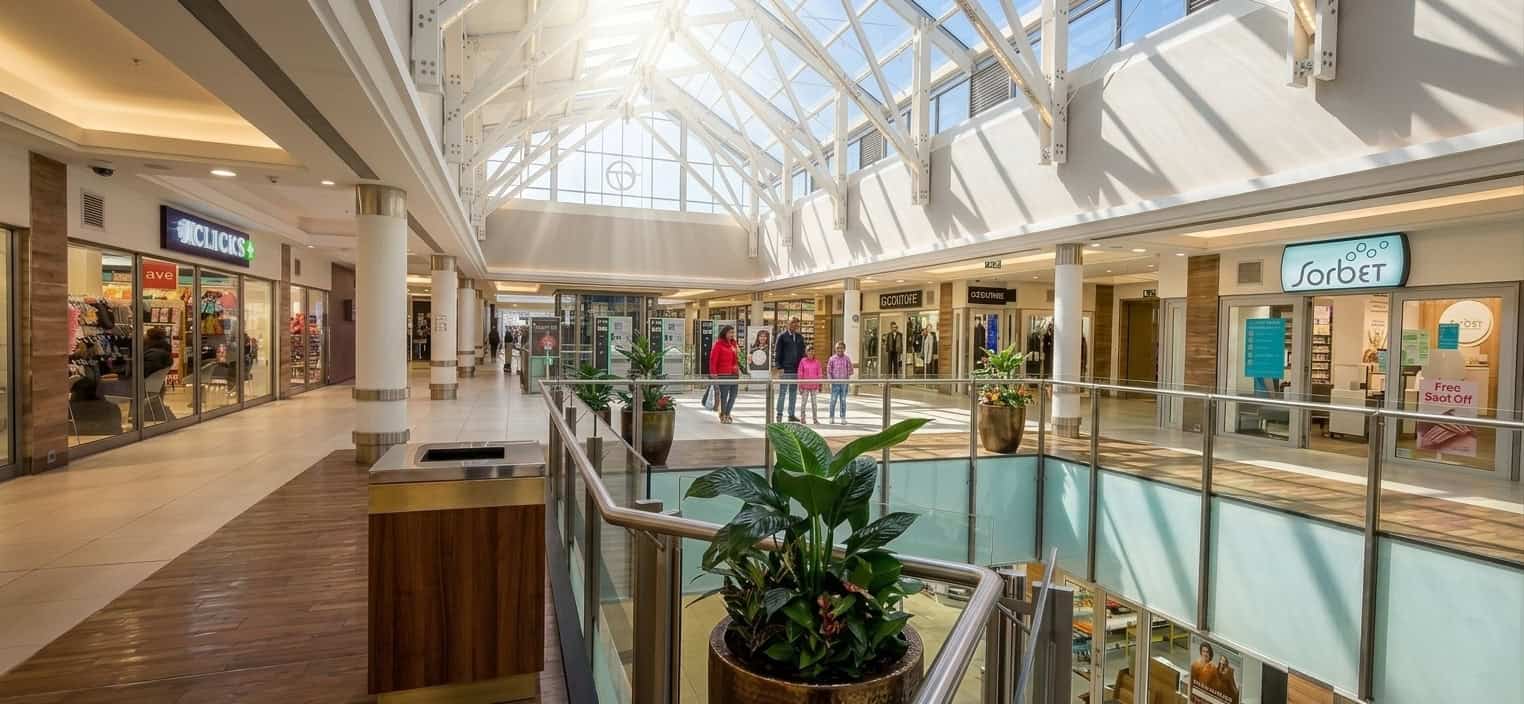
The major renovation that took place around 2014 was a game-changer. It was a masterclass in how to modernize a historic structure. They opened up the ceilings, introduced more natural light, and replaced the dated orange-and-brown palettes with sleek, high-end finishes. Most importantly, they curated a tenant mix that reflected the changing face of the City Bowl—the young professionals, the digital nomads, and the design-conscious homeowners.
Today, you’ll find heavyweights like Pick n Pay and Woolworths acting as the anchors, but the real magic is in the smaller stores. Whether it’s the high-end kitchenware at Le Creuset or the exquisite pastries at Cassis, the centre feels premium yet accessible.
- Light and Space: The renovation replaced the “closed-in” feeling of the original mall with glass and open sightlines.
- The Curated Mix: The focus shifted toward lifestyle and design, catering to the creative community that populates the nearby studios and agencies.
- Infrastructure Upgrades: Significant work was done on the parking systems and accessibility, making it one of the easiest “quick-stop” malls in the city.
Key Takeaway: A series of thoughtful renovations helped the Gardens Shopping Centre transition from a Brutalist giant to a sleek, modern lifestyle hub while preserving its neighborhood “village” charm.
Why the Gardens Centre Still Matters
In an era of online shopping and massive mega-malls, why does a relatively small shopping centre in the middle of a residential suburb continue to thrive? I think it comes down to the “human scale” of the place.
There is a sense of community at Gardens that you just don’t find at the V&A Waterfront or Canal Walk. The security guards know the regular shoppers. The baristas know your coffee order before you’ve even reached the counter. It is one of the few places in Cape Town where the “village” isn’t just a marketing slogan—it’s a reality.
The centre also plays a vital role as a gateway. It’s the last stop for many people before they head over Kloof Nek toward the beaches of Clifton or Camps Bay. It’s the pantry for the hikers who are about to tackle the Platteklip Gorge. It is a functional, busy, and unpretentious part of the city’s infrastructure that also happens to be a great place to people-watch.
- The Social Aspect: It is the primary meeting point for residents of the City Bowl, acting as a neutral ground for social catch-ups.
- The Efficiency: Because of its compact size, you can get a week’s worth of high-quality groceries, visit a pharmacy, and buy a birthday gift all within thirty minutes.
- Dog-Friendly Vibes: While dogs aren’t allowed inside the shops, the outdoor areas and the general atmosphere of the surrounding Gardens District are incredibly pet-friendly, adding to the relaxed, neighborhood feel.
Key Takeaway: The enduring success of the Gardens Shopping Centre lies in its ability to provide a high-end retail experience that remains deeply rooted in the daily lives of the local community.
Planning Your Visit to the Centre
- The Parking Strategy: The underground parking is convenient, but the rooftop parking offers some of the best views of the mountain you’ll find anywhere. It’s worth the extra ramp climb.
- Early Morning Magic: Visit before 9:00 AM on a weekday. The light is beautiful, the smell of fresh bread is at its peak, and you can enjoy a quiet coffee before the mid-morning rush begins.
- Explore the Perimeters: Don’t just stay inside the mall. The shops along the exterior—facing Buitenkant Street and Mill Street—often house interesting boutiques and services that are easy to miss.
- The Residential View: While you can’t go up into the tower without an invite, if you ever get the chance to visit a friend living there, take it. The views are life-changing.
- Check the Official Site: For the most up-to-date store directory and any holiday hours, always consult the Gardens Shopping Centre official website.
The Heartbeat of the Bowl
Ultimately, the Gardens Shopping Centre is a testament to the fact that buildings are more than just brick and mortar (or, in this case, raw concrete). They are the containers for our memories and the stages for our daily rituals. From its bold beginnings as a Brutalist experiment in the 70s to its current status as the city’s most beloved lifestyle hub, the Gardens Centre has remained a constant in an ever-changing city.
It isn’t just a place to buy things; it is a place where Cape Town happens. It’s where the mountain meets the mall, and where the history of the suburb is still being written, one espresso at a time. Whether you’re there for the German deli meats, the high-end fashion, or just to feel the pulse of the City Bowl, the Gardens Centre remains a legendary piece of the Cape Town puzzle.