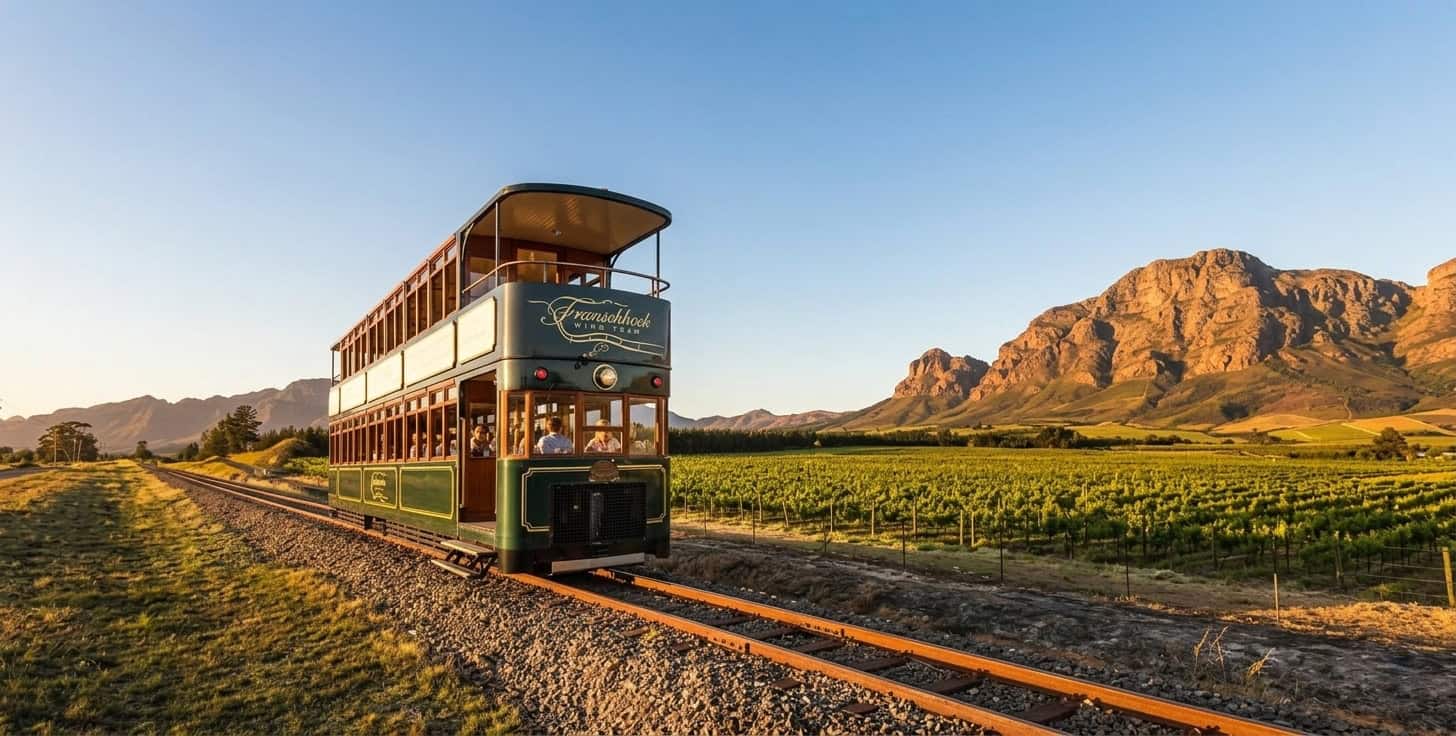
There is a very specific kind of magic that happens when you’re sitting on the upper deck of a vintage-style tram, a light breeze is cooling the afternoon sun, and you’re looking out over rows of vines that seem to stretch indefinitely toward the purple-hued Groot Drakenstein mountains. If you’ve ever found yourself in the Western Cape, you’ve likely heard people rave about Franschhoek. It’s the “French Corner” of the Cape, a valley that feels like a slice of Provence dropped into the tip of Africa. But if you really want to experience it without the logistical nightmare of nominating a designated driver or squinting at GPS maps while navigating narrow vineyard roads, there is only one way to go: the Franschhoek Wine Tram.
I’ll admit, the first time I saw the tram, I thought it might be a bit of a tourist gimmick. How wrong I was. It turns out that hopping on a refurbished 1920s-style tram (and its fleet of open-air buses) is actually the most sophisticated way to see the valley. It’s social, it’s organized, and it allows you to focus entirely on the quality of the Chardonnay rather than the quality of the road.
Whether you’re a total wine novice or a seasoned sommelier, navigating the different lines and schedules can feel a bit like trying to solve a puzzle. Here is my personal, tried-and-tested guide to making the most of your day on the rails.
1. How Does the Wine Tram Actually Work?
Before we get into the wine, let’s talk logistics. The concept is simple: it’s a hop-on, hop-off service. You buy a ticket for a specific “Line” (each designated by a color), and that line follows a loop of various wine estates.
You’ll start your day at either the Franschhoek Terminal in the heart of the village or the Groot Drakenstein Terminal further down the valley. Once you’re checked in and have your color-coded sticker prominently displayed on your shirt, you’re ready to roll.
The Difference Between the Tram and the Bus
It’s important to manage your expectations: you aren’t on the actual tracks for the entire day. Because many of the best estates are tucked away in the corners of the valley where tracks don’t go, the service uses a combination of the tram and open-air “tram-buses.”
- The Tram: A beautiful, double-decker vehicle that runs on the old railway line. This is where you get those iconic photos.
- The Tram-Bus: Designed to look like the tram but with wheels, these buses navigate the winding estate roads. They are open-sided, so you still get that “wind in your hair” feeling.
Key Takeaway: You will spend about 50% of your transit time on the bus and 50% on the tram, depending on which line you choose. For the most time on the actual rails, look for lines that emphasize the valley floor.
2. Choosing Your Line: The Color Palette of the Valley
This is where most beginners get stuck. There are currently about ten different lines (Navy, Pink, Green, Blue, etc.), and they all look equally tempting. While you should definitely check the Franschhoek Wine Tram official website for the most up-to-date route maps and pricing, here is a general breakdown of the vibes:
For the History Buffs: The Blue and Burgundy Lines
These lines tend to focus on the more historic, established estates. If you want to see Cape Dutch architecture at its finest and stroll through manor houses that have stood for centuries, these are your best bets. You’ll often find yourself at places like Grande Provence Heritage Wine Estate, which feels like walking into an art gallery that just happens to serve incredible Cabernet Sauvignon.
For the Garden Lovers: The Orange and Navy Lines
If you’re someone who appreciates a manicured hedge as much as a Merlot, these routes often include a stop at Babylonstoren. This isn’t just a wine farm; it’s a sprawling garden wonderland with an edible maze and a farm shop that will make you want to move in permanently.
For the Mountain Views: The Pink and Grey Lines
These lines take you toward the higher reaches of the valley. The views from Dieu Donné Vineyards or Chamonix are unparalleled. You’re looking down on the entire Franschhoek village, and the air feels just a little bit crisper up there.
Key Takeaway: Don’t stress too much about the “best” line. Every single route has at least three world-class estates. Pick the one that has that one farm you’ve always wanted to visit and let the rest of the day surprise you.
3. The “Big Three” Rules for a Perfect Day
I’ve seen many people start their Wine Tram journey with high spirits and end it with a very expensive Uber ride and a headache. To avoid being “that person,” follow these rules:
- Eat a Substantial Breakfast: Wine tasting on an empty stomach is a sprint, not a marathon. Start your day with a hearty meal in Franschhoek village.
- Stick to the “Rule of Four”: Most lines allow you to visit up to seven or eight estates. Don’t do it. By the fifth stop, your palate will be fatigued, and you’ll be rushing just to catch the next bus. Four estates is the sweet spot. It gives you an hour and a half at each place to actually enjoy the scenery.
- Book Your Lunch in Advance: This is the most common mistake. The popular restaurants on the tram routes fill up weeks in advance. If you have your heart set on dining at Boschendal or Rickety Bridge Wine Estate, make a reservation the moment you book your tram tickets.
4. Notable Stops: Where to Hop Off
While every farm is unique, there are a few heavy-hitters that consistently deliver a great experience for beginners.
Leopard’s Leap Family Vineyards
This is a great place to start your day. It’s modern, unpretentious, and very approachable. They offer fun pairings—sometimes involving South African snacks like biltong—and the atmosphere is buzzing. It’s a low-pressure way to ease into the world of wine tasting.
Rickety Bridge Wine Estate
There is something genuinely charming about this spot. To get from the tram stop to the tasting room, you have to cross a small bridge over a stream. The views of the mountains from their deck are spectacular, and their “Foundation Stone” blend is a crowd-pleaser.
Maison Estate
If you like a more contemporary, minimalist aesthetic, Maison is your stop. It feels like a high-end designer home. The tasting room opens out onto a lawn where chickens roam freely, and the wine is consistently excellent.
Key Takeaway: Mix up your stops. Visit one “Giant” (like Boschendal), one “Modern” (like Leopard’s Leap), and one “Boutique” (like Rickety Bridge) to get a full sense of what the valley offers.
5. Beyond the Wine: The Village Atmosphere
Your day usually ends back at the Franschhoek Main Road. Don’t just rush to your car or your hotel. The village itself is half the fun.
Franschhoek is often called the culinary capital of South Africa. If you still have room after your wine estate lunch, the main strip is lined with award-winning bistros and chocolate shops.
- For a Sweet Treat: Stop by Huguenot Fine Chocolates for a demonstration and a box of handmade truffles.
- For a Sunset Drink: If you can somehow handle one more glass, the garden at Le Quartier Français is one of the most serene spots in the country.
6. Practical Tips for the Beginner
- Hydrate Like Your Life Depends On It: Every estate will offer you water. Drink it. For every glass of wine, drink a glass of water. Your future self will thank you.
- Wear Sunscreen: Even on the tram, you are exposed to the African sun. The open-air buses mean you’re getting a lot of UV rays while you’re distracted by the view.
- Carry a Bag: You will buy wine. It’s inevitable. Most estates can ship the wine to your home (even internationally), but if you’re buying a bottle or two to enjoy that evening, you’ll want a comfortable bag to carry them in.
- The Last Tram is Non-Negotiable: Check your timetable carefully. If you miss the last bus from an estate, you are on your own. The tram staff is incredibly punctual, so being “two minutes late” usually means you’re watching the tram disappear around the bend.
The Verdict: Is it Worth It?
People often ask me if the Wine Tram is better than just booking a private driver. My answer is always: it’s different. A private driver is luxury and privacy, but the Wine Tram is an experience. There is a communal joy on the tram; you’ll find yourself chatting with people from all over the world, comparing notes on which Chenin Blanc was the best.
It’s a celebration of the valley. It forces you to slow down, to look at the mountains, and to appreciate the fact that you are in one of the most beautiful wine-growing regions on Earth. Whether you’re celebrating an anniversary, a birthday, or just the fact that it’s Saturday, the Franschhoek Wine Tram is a “must-do” that actually lives up to the hype.
Just remember to check the official website for the latest schedules, as they can change based on the season.