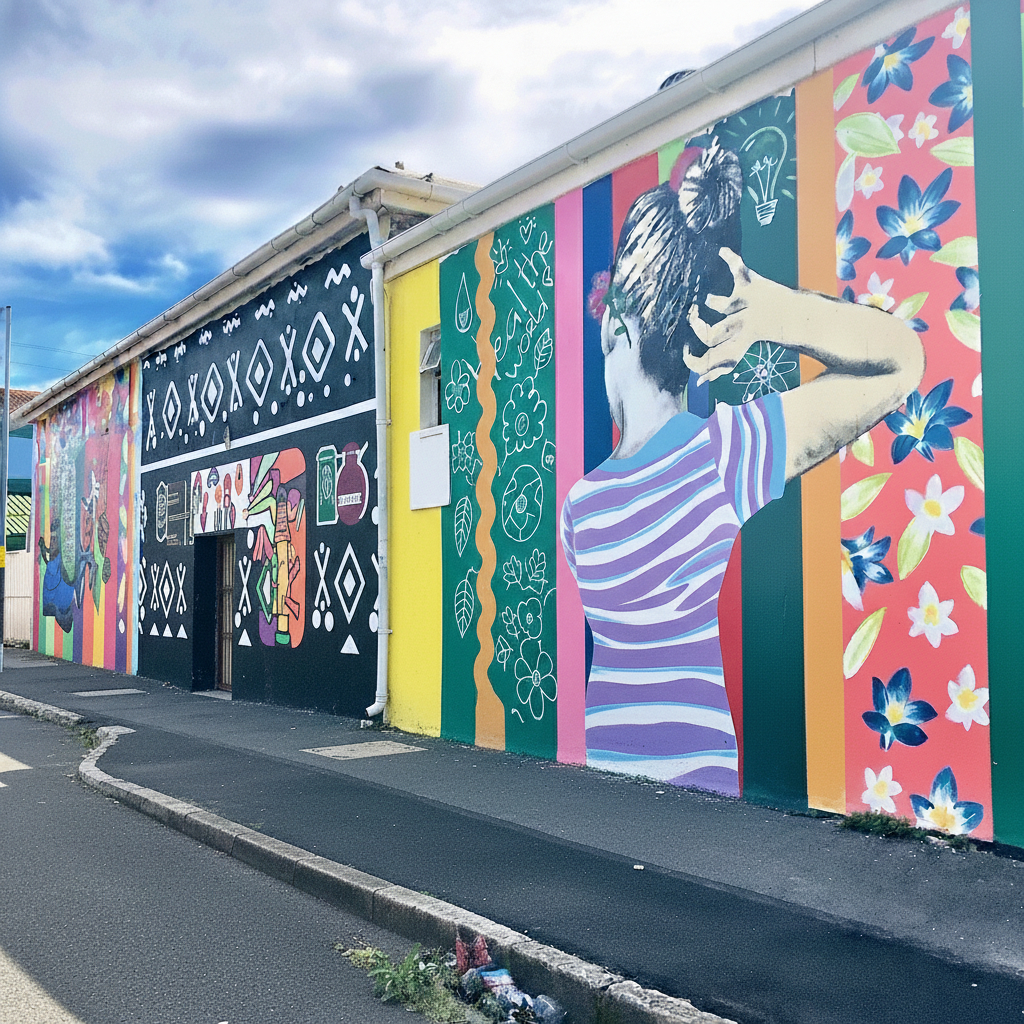
If you had asked a local about Salt River a decade ago, they probably would have described it as the “industrial engine room” of Cape Town. It was a place of humming textile factories, steel-toed boots, and the rhythmic clatter of trains pulling into the station. But as we move through February 2026, this neighborhood has shed its “gray” reputation for something far more vibrant.
While neighboring Woodstock has drifted toward high-end furniture showrooms and polished galleries, Salt River has kept its grit—and it has used that grit as a canvas. Today, it stands as the southern hemisphere’s most significant open-air gallery. But this isn’t just about “beautification.” In 2026, the street art here serves as a visual archive of community resistance, cultural heritage, and the ongoing struggle against the tide of gentrification. If you want to see the real Cape Town—the one that doesn’t fit on a glossy postcard—you need to spend a morning on these streets.
The 2026 Landscape: Why Salt River Still Wins
You might be wondering: “Is the street art scene still relevant in 2026?” The answer is a resounding yes. In fact, it’s more critical than ever. As property developers eye the historic Victorian terraces of Salt River, the murals have become a form of territorial claim.
The International Public Art Festival (IPAF), which just wrapped up its mid-February 2026 run, has added another 15 massive works to the district. The 2026 theme, “Generations of Light,” focuses on the neighborhood’s matriarchs and the textile workers who built the city’s economy. Walking through the streets today, you’ll see fresh paint still curing in the sun, smelling of aerosol and optimism.
What makes Salt River unique compared to the street art scenes in London or New York is the consent factor. Unlike “guerrilla” graffiti, these murals are almost entirely painted with the permission and involvement of the homeowners. You’ll see a three-story photorealistic portrait on the side of a house where the family has lived for four generations. It’s an intimate, living partnership between global artists and local residents.
Choosing Your Adventure: The 2026 Tour Breakdown
In 2026, there are three primary ways to experience this concrete canvas. Each offers a completely different “flavor” of the neighborhood.
1. The Deep Dive with Baz-Art
Baz-Art remains the primary custodian of the Salt River art scene. Their headquarters at the Salt River Arcade s the nerve center for all things mural-related.
- The Experience: These tours are led by experts who understand the technicality of the art and the politics of the placement. They can tell you exactly why a certain artist chose a specific wall and how many liters of paint it took to cover it.
- Best For: The “art nerd” who wants to know the difference between a Montana Gold spray can and a stencil cap, and who wants to understand the global context of the artists involved.
2. Seeing Through Sound: The Outtasight Blind Tour
Easily the most profound way to experience Salt River in 2026 is the Outtasight Blind Art Tour. Led by the legendary Winston Fani, Africa’s first qualified blind tour guide, this experience challenges everything you think you know about visual art.
Winston navigates the streets of Salt River using a combination of memory, sound, and tactile “Braille paths” built into the sidewalks. He describes the murals using vivid, sensory storytelling that he has developed in collaboration with the artists.
“I don’t see the colors with my eyes,” Winston explains, “but I feel the scale of the wall and the energy of the community.”
This tour is operated in partnership with AWOL Tours and usually begins at the South African Institute for the Blind. It is a masterclass in empathy and perspective.
3. The Self-Guided “Digital” Wander
If you prefer to move at your own pace with a pair of headphones, you can download the IPAF 2026 Art Route Map. In early 2026, the organizers integrated Augmented Reality (AR) into many of the pieces. Using your phone, you can “scan” a mural and watch it come to life—the characters might move, or the artist’s initial sketches might overlay the finished product.
The 2026 “Must-Sees”: 4 Murals That Define the District
While there are over 130 murals in the area, you’ll get “gallery fatigue” if you try to see them all. Here are the four you absolutely cannot miss:
The “Matriarch” by Nardstar*
Located on the corner of Pope and Kingsley Streets, this geometric masterpiece by local legend Nardstar* is a 2026 favorite. It features a local resident surrounded by Cape fynbos. The colors—deep teals and vibrant oranges—are meant to reflect the dual nature of the neighborhood: its industrial past and its natural beauty.
Falko One’s “Hidden Elephants”
Falko One is the grandfather of South African street art. His trademark elephants are scattered all over Salt River. In 2026, hunting for “Falkos” has become a bit of a local sport. Look for the one tucked into an alley near the Salt River Railway Station. It uses the existing textures of the weathered wall—cracks, pipes, and moss—to create the elephant’s trunk and ears.
Case Maclaim’s “The Hands”
German artist Case Maclaim is world-renowned for his photorealistic depictions of hands. His work on Albert Road is a staggering piece of technical skill. In 2026, despite years of exposure to the Cape Town sun, the detail remains crisp. It represents the “work” of the neighborhood, a nod to the manual labor that defines Salt River’s history.
The “Solidarity Wall” (2026 Addition)
Freshly painted for the February 2026 festival, this collaborative piece near Community House features artists from five different African nations. It’s a bold, colorful statement on Pan-Africanism, depicting a bridge made of intertwining human arms.
Beyond the Paint: Where to Refuel
Walking Salt River in February is hot work. The “South Easter” wind might be blowing, but the sun is relentless. Luckily, the neighborhood’s culinary scene has exploded alongside the art.
- The Morning Fix: Start your day at Rosetta Roastery in the Pals Building. In 2026, it remains the gold standard for coffee in the city. Their “Flat White” is non-negotiable.
- The Lunch Power-Move: Head to Bistro31 at the Upper Eastside hotel. It’s a chic, hidden gem that serves an incredible Sunday roast and modern South African tapas.
- The Local Vibe: For something more casual, Devil’s Peak Taproom is just a short walk away. Their burger and “First Light” Ale pairing is a local legend, and it’s the perfect place to sit and review your photos.
Practical Magic: 2026 Logistics & Safety
Salt River is a living neighborhood, not a theme park. To have the best experience, you need to be smart about your logistics.
- Timing: The best light for photography is between 08:30 AM and 10:30 AM. After that, the sun becomes too “overhead,” creating harsh shadows that wash out the mural colors.
- Safety: The Salt River Business Improvement District (SRBID) has significantly increased its presence in 2026. You’ll see “Public Safety” officers on most corners in the art hub. That said, don’t walk around with your expensive camera gear dangling loosely. Use a strap and stay aware of your surroundings.
- The “Rule of Respect”: Remember that people live here. Don’t block driveways, don’t shout under windows, and if you want to take a photo of a local resident, always ask first. A simple “Can I take your picture?” goes a long way in this community.
- Footwear: The sidewalks in Salt River are “characterful,” which is a polite way of saying they are uneven. Leave the sandals at home and wear a sturdy pair of sneakers.