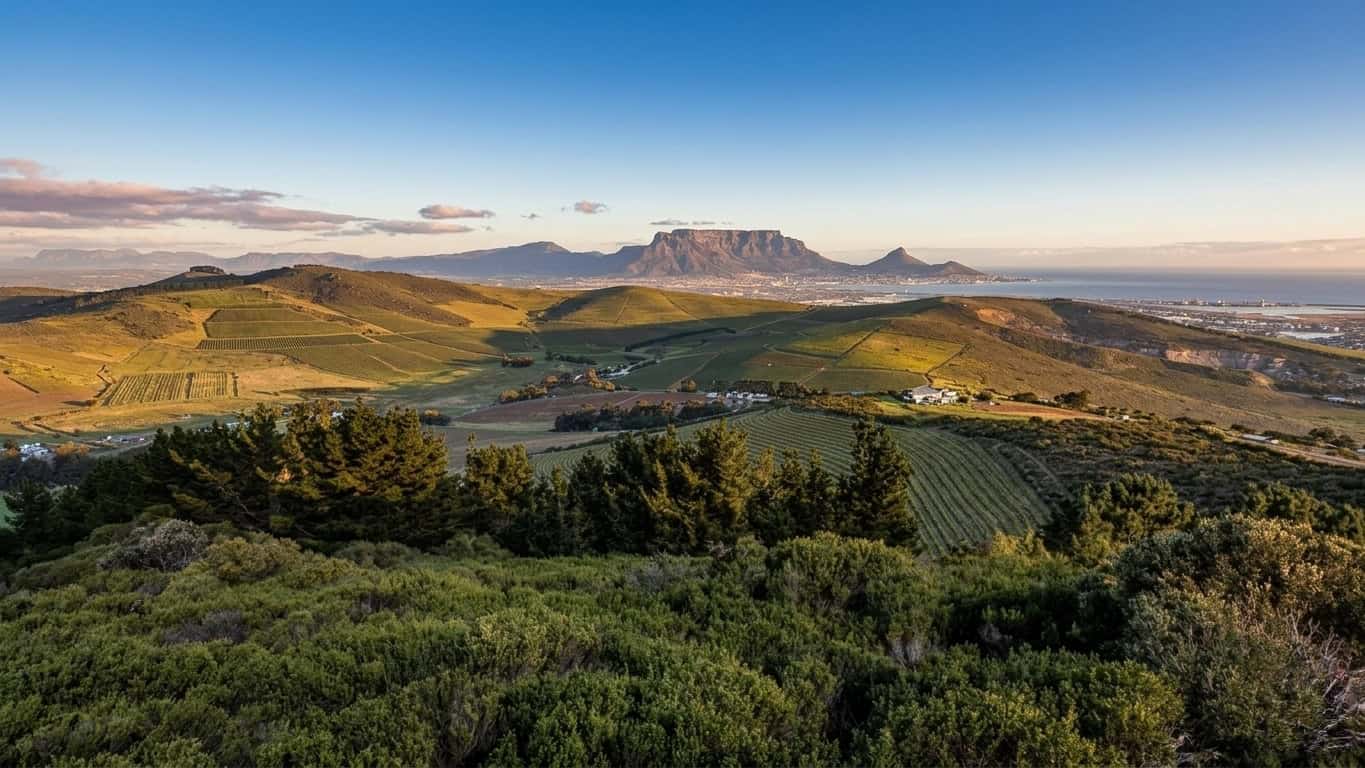
If you ask a tourist where to find the best wine in the Cape, they’ll almost certainly point you toward the towering peaks of Stellenbosch or the French-inspired corners of Franschhoek. They aren’t wrong, of course—those valleys are legendary for a reason. But if you ask a local where they actually go on a sunny Saturday afternoon when they want world-class wine without the pretense or the hour-long commute, they’ll tell you to head north. Just twenty minutes from the center of Cape Town lies a stretch of rolling green hills that feels a world away from the city’s concrete hum. This is the Durbanville Wine Valley, and if you haven’t explored it yet, you’re missing out on the Cape’s most understated gem.
I remember the first time I really “discovered” Durbanville. I had lived in the city for years, always treating the northern suburbs as a place you simply passed through on your way somewhere else. Then, a friend dragged me to a tasting on a ridge overlooking Table Bay. As the sun began to dip and the Atlantic breeze kicked up, cooling the vines, I realized that this valley has a secret weapon that the inland regions don’t: the ocean. This proximity to the sea creates a “cool climate” paradise, making Durbanville the undisputed capital of Sauvignon Blanc in South Africa. But beyond the wine, there’s a sense of community and a rugged, outdoorsy spirit here that makes it feel uniquely authentic.
The Soul of Sauvignon Blanc and the Cool Climate Edge
Before we dive into the specific farms, it’s worth understanding why the wine here tastes the way it does. Have you ever noticed how some Sauvignon Blancs are overly tropical and sweet, while others have that crisp, flinty, “green” kick? Durbanville leans heavily into the latter. Because the valley is so close to the Atlantic Ocean, the vines are constantly bathed in cool sea air. This slows down the ripening process, allowing the grapes to develop intense flavors while keeping that zesty acidity that makes a glass of white wine so refreshing on a hot day.
While the region is famous for its whites, don’t let that fool you into thinking they can’t do reds. The clay-rich soils on the higher slopes produce some of the most elegant Merlots and Cabernet Sauvignons you’ll find in the country. It’s this diversity—the ability to jump from a crisp glass of bubbly to a deep, earthy red within the same valley—that keeps people coming back.
Key Takeaway: Durbanville is the premier cool-climate region of the Cape. Its proximity to the ocean makes it a world-class producer of Sauvignon Blanc, offering a crispness and acidity that is hard to replicate further inland.
The Landmarks of the Valley: From History to High-End Views
The valley is home to a mix of massive, well-known estates and tiny, family-run boutiques. To get a true sense of the place, you really need to visit a bit of both.
De Grendel Wine Estate
Perched on the Tygerberg Hill, De Grendel offers what many consider to be the single best view in the entire Western Cape. On a clear day, you can see the city bowl, Table Mountain, and the shimmering blue of the Atlantic all in one frame. The Graaff family has owned this land for generations, and there is a deep sense of heritage here. The tasting room is glass-walled and sleek, but the service remains warm and personal. If you’re a fan of Méthode Cap Classique (South Africa’s version of champagne), their bubbly is a revelation.
Diemersdal Wine Estate
If Sauvignon Blanc is the king of Durbanville, Diemersdal is its throne. The Louw family has been making wine here for six generations, and they are masters of innovation. They were among the first to experiment with “winter-fermented” Sauvignon Blanc and even a frozen version. Walking onto the farm feels like stepping into a traditional Cape homestead, but the wines are cutting-edge. It’s unpretentious, lively, and almost always busy—a testament to how much the locals love it.
Durbanville Hills
You’ve likely seen their bottles on supermarket shelves around the world, but visiting the “mothership” is a different experience entirely. This is one of the larger producers in the valley, and their cellar is an architectural landmark. Their restaurant, The Tangram, is widely regarded as one of the best in the northern suburbs. It’s the kind of place where you can have a sophisticated multi-course meal while looking out over the vineyards toward Robben Island.
The Boutique and the Quirky: Finding the Hidden Nooks
Once you’ve ticked off the big names, it’s time to find the spots that give the valley its quirky character. This is where the real “insider” knowledge comes in.
Klein Roosboom Boutique Winery
This might be my favorite stop in the entire valley. Why? Because of the “caves.” They’ve converted their old concrete fermentation tanks into private, themed tasting nooks. Each one is decorated differently—some are romantic and moody, others are bright and bohemian. It’s intimate, fun, and perfect for a group of friends. Their “Jéan” range of wines is named after the owner’s son, and you can feel the family passion in every bottle. It’s boutique in the truest sense of the word.
Nitida Wine Farm
Handmade is more than just a physical process and approach, it is about perfecting the small details along the way while treating each batch of juice with respect throughout its journey from the vine to Nitida wines. It is also about working with nature and thereby ensuring that the wine embodies their attitude.
Signal Gun
If you want something a bit more casual, Signal Gun is the spot. It’s named after the historic signal cannons that used to alert the valley when ships arrived in Table Bay. They still fire a cannon on the first Saturday of every month! They have a great outdoor deck, serve fantastic pizzas, and even have their own craft brewery on-site for those who need a break from the grapes.
Key Takeaway: The variety of experiences in Durbanville is its greatest strength. You can move from the high-end luxury of De Grendel to the quirky, intimate “caves” of Klein Roosboom in less than ten minutes.
More Than Just the Pour: Nature and Adventure
One of the things that distinguishes Durbanville from other wine regions is how integrated it is with the local outdoor lifestyle. You aren’t just here to drink; you’re here to move.
Mountain Biking Mecca
The Durbanville Wine Valley is home to some of the best mountain bike trails in the world. Many of the farms, including Meerendal Wine Estate and Bloemendal, have created extensive trail networks that wind through the vineyards and up into the hills. On any given weekend morning, the parking lots are filled with cyclists gearing up for a ride.
Tygerberg Nature Reserve
If you prefer your movement on two feet rather than two wheels, this reserve is a must. It offers a series of well-marked hiking trails that take you to the highest points of the hills. From the summit, the 360-degree view is staggering.
Majik Forest
For something a bit more “fairytale,” head to the Majik Forest. It’s a beautiful stretch of greenery tucked between residential areas, featuring a dam, winding paths, and a dense canopy of trees.
Planning Your Valley Escape
If you’re planning a trip to the valley, there are a few practical things to keep in mind to make the most of your day.
- Transportation: While it’s close to the city, the farms are spread out. If you plan on tasting at multiple estates, I highly recommend using a ride-sharing service or booking a local shuttle.
- The Weather: Durbanville can be a few degrees cooler than the city center because of that Atlantic breeze. Even on a hot day, it’s worth bringing a light jacket.
- Bookings: While many places accept walk-ins, the more popular restaurants like The Tangram or Cassia fill up fast. I always suggest checking the official websites of places like De Grendel or Durbanville Hills to book a table.
- The Seasons: Harvest time (usually February and March) is an exciting time to visit, as the valley is buzzing with activity. However, don’t sleep on the winter months.
Why Durbanville Wins the Local Vote
There is a lack of pretension in the Durbanville Wine Valley that is becoming harder to find in some of the more “touristy” regions. It’s a place where the winemakers are often the ones pouring your glass, and the person at the next table is likely a local who has been coming here for twenty years.
Whether you are an avid mountain biker looking for a new trail, a foodie searching for the next great vineyard lunch, or a wine lover on a quest for the perfect Sauvignon Blanc, this valley has an answer for you. It’s a reminder that sometimes the best experiences are the ones hiding in plain sight, just over the next hill.