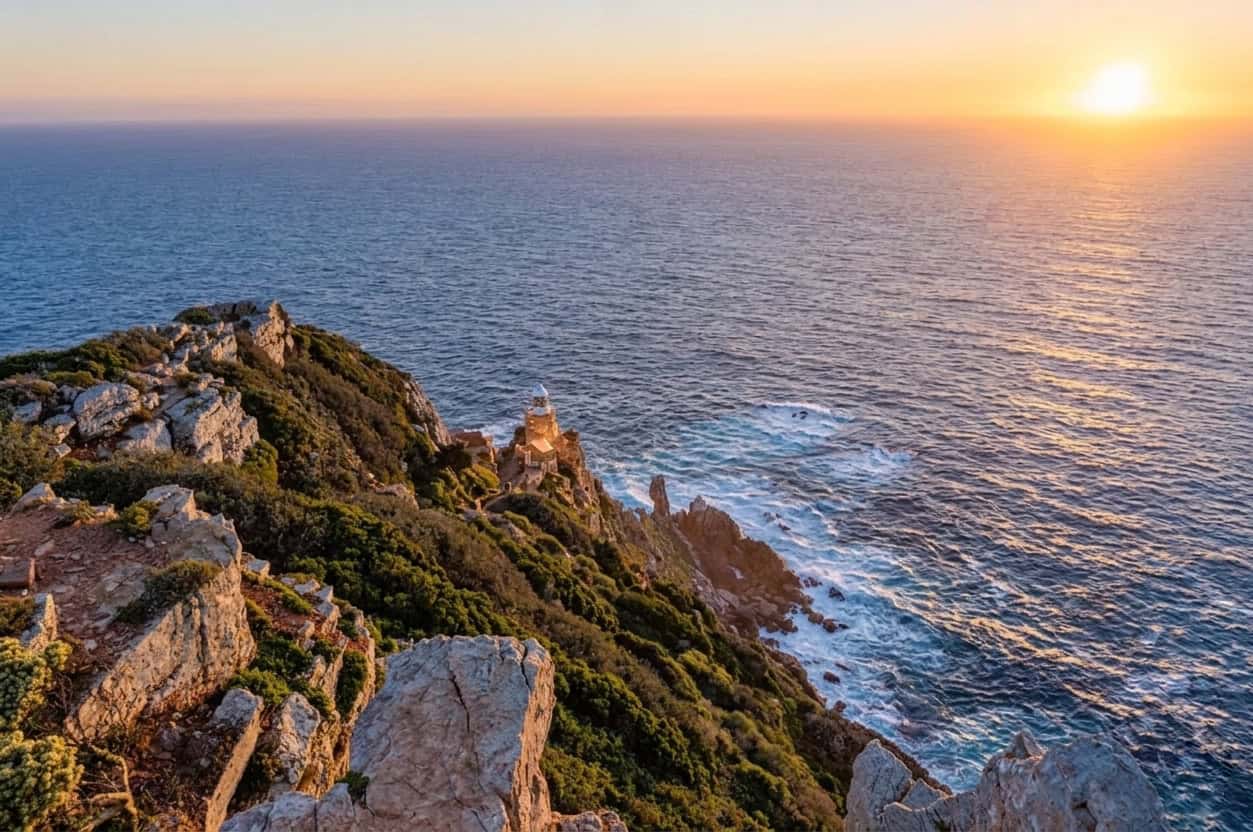
Standing at the edge of the cliffs at Cape Point Nature Reserve, you can feel the raw, unbridled power of the Atlantic Ocean in your very bones. There is a reason early sailors called this the Cape of Storms. It is a place that feels unfinished, a rugged frontier where the African continent finally surrenders to the sea.
If you are looking for a sterilized, manicured park experience, this isn’t it. Cape Point is a sprawling, 7,750-hectare wilderness located within the southern section of the Table Mountain National Park. Whether you are a history buff chasing the legend of the Flying Dutchman or a hiker looking to escape the city’s hum, this reserve is the ultimate Cape Town pilgrimage.
The Epic Journey to the End of the Peninsula
Half the magic of Cape Point lies in the journey itself. From the Cape Town city center, you have two primary choices. You can take the “Low Road” through Muizenberg and Kalk Bay, hugging the False Bay coastline, or the “High Road” via Hout Bay and the legendary Chapman’s Peak Drive.
I always recommend the Chapman’s Peak route for the way there. By the time you reach the main gates of the reserve, the city feels like a distant memory.
- The Entry: The main gate is where your adventure truly starts. If you have a South African ID or a SANParks Wild Card, make sure to have them ready.
- The Drive Inside: Once through the gates, the speed limit drops. This is because the wildlife—from ostriches to tortoises—tends to treat the asphalt as their own personal sunbed.
- The Visitor Centre: Stop at the Buffelsfontein Visitor Centre near the entrance. It is a goldmine of information about the flora and fauna.
Key Takeaway: The journey to Cape Point is as spectacular as the destination itself, with Chapman’s Peak offering a dramatic introduction to the rugged southern coastline.
Ascending to the Iconic Lighthouses
When people talk about Cape Point, they are usually picturing the Old Lighthouse. Perched 238 meters above sea level, it is the highest point in the reserve. However, because it was built so high, it was frequently shrouded in mist, leading to a New Lighthouse being built much lower down on the cliffs. It remains the most powerful light on the South African coast.
- The Flying Dutchman Funicular: If the steep walk sounds daunting, you can take the Flying Dutchman Funicular. It’s a fun, quick ride that saves your legs for the more rugged trails.
- The Viewpoints: Once at the top, look down at the churning white water of Diaz Beach. On a clear day, you can see the entire curve of False Bay.
Key Takeaway: Cape Point features two distinct lighthouses that tell a story of maritime trial and error, offering some of the most dramatic coastal views in the southern hemisphere.
Exploring the Ghostly Shipwrecks and Wild Trails
The true soul of the reserve is found on its hiking trails. The Shipwreck Trail (Thomas T. Tucker trail) is a personal favorite. Starting at Olifantsbos, this circular route takes you along the shoreline where the bleached ribs of a 1942 Liberty ship still sit in the sand.
If you are looking for a more strenuous mission, the Cape of Good Hope Trail connects the main lighthouse area with the famous sign at sea level. It’s a wooden boardwalk that winds along the cliff edge.
- Flora: Look for the “Cape Point Pincushion” and various Ericas endemic only to this tiny tip of the peninsula.
- Whale Watching: Between June and November, keep your eyes on the horizon for Southern Right and Humpback whales.
Key Takeaway: The Shipwreck Trail offers a unique blend of maritime history and coastal hiking, allowing you to see the physical remains of the Cape’s treacherous nautical past.
Encountering the Wild Residents of the Cape
Cape Point is home to the Chacma baboons—some of the only baboons in the world that forage for shellfish along the shore. While they are fascinating, they are incredibly clever and opportunistic with car doors and backpacks.
- The Rules: Keep your windows rolled up and your doors locked. Never feed them; it leads to aggressive behavior that results in the animals being euthanized.
- The Gentler Side: Look out for Cape Mountain Zebra, Bontebok, and Eland. Seeing a massive Eland standing on a white-sand beach is an unforgettable sight.
- The Birds: Watch for Verreaux’s Eagle soaring near the cliffs or African Ostriches roaming near the Buffels Bay picnic area.
Key Takeaway: Wildlife encounters are a certainty at Cape Point, but respecting the “no-feeding” policy is crucial for the safety of both visitors and animals.
Dining at the Edge of the Two Oceans
The Two Oceans Restaurant is the primary dining destination, famous for its deck hanging over the cliffs of False Bay. The menu leans heavily into fresh, local seafood. If you prefer a “DIY” approach, the reserve has spectacular picnic and braai spots at Buffels Bay and Bordjiesrif.
- Picnic Supplies: There are no shops inside the reserve for charcoal or meat, so stock up in Simon’s Town or Noordhoek first.
- Hydration: The wind and sun will dehydrate you faster than you realize. Keep plenty of water in your vehicle.
Key Takeaway: Whether you choose the fine dining of Two Oceans Restaurant or a traditional braai at Buffels Bay, eating at Cape Point is a scenic highlight.
Vital Logistics for a Seamless Visit
- The Wind: If the wind is gusting above 40km/h, the funicular may close. Check a local forecast before you leave.
- The Sun: The white sand and rocks reflect UV rays intensely. Wear a hat with a chin strap so the wind doesn’t take it.
- Timing: Arrive early to beat the tour buses, which usually arrive around 10:30 AM.
- The Cape of Good Hope Sign: Head to the famous wooden sign first thing in the morning if you want a photo without the crowds.
- Official Info: Check the Official Cape Point Website for current entry requirements.
A Landscape That Demands Respect
There is a sense of finality at Cape Point. It is a place where you can stand and know that there is nothing but thousands of kilometers of ocean between you and Antarctica. It is the rugged, salt-crusted crown of the Cape Peninsula, and it is a place that every traveler should experience at least once.