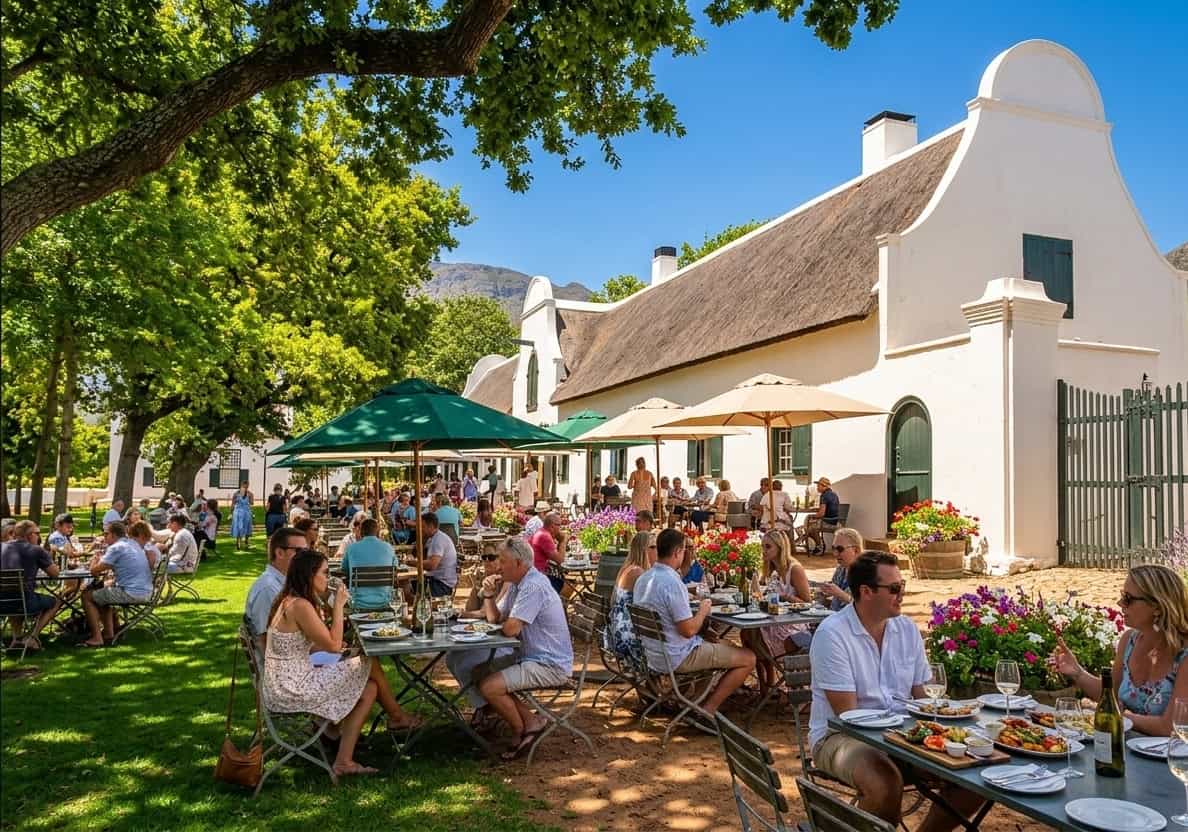
There is a very particular feeling you get when you turn off the main road in Constantia and find yourself under a canopy of oak trees that have stood for centuries. The air feels a few degrees cooler, the light filters through the leaves in golden patches, and the city’s frantic pace seems to vanish in the rearview mirror. You aren’t just entering a wine farm; you are stepping into the literal birthplace of the South African wine industry. Groot Constantia is not just the oldest estate in the country—dating all the way back to 1685—it is a living, breathing testament to how history and modern luxury can coexist without losing their soul.
I often find myself wondering why this specific estate remains so magnetic. In a province filled with hundreds of spectacular wine farms, many with more avant-garde architecture or flashier tasting rooms, Groot Constantia keeps a quiet, dignified grip on the top spot. Is it the history? Is it the wine that was once requested by emperors on their deathbeds? Or is it simply the fact that it feels like a sanctuary? Whatever the reason, if you haven’t spent an afternoon wandering its white-walled avenues lately, you are missing out on the quintessential Cape experience.
The Weight of Three Centuries of Heritage
When Simon van der Stel was granted this land in the late 17th century, he had a vision for a farm that would produce the finest wine in the world. He chose this specific valley because of its proximity to the ocean and the way the mountains shelter the vines from the worst of the Cape winds. Standing in front of the Manor House today, it’s easy to see that his vision survived the test of time.
The house itself is a masterpiece of Cape Dutch architecture. With its thatched roof, grand gables, and sprawling “stoep,” it looks exactly as it did centuries ago. Today, it serves as part of the Iziko Museums, and I highly recommend taking twenty minutes to walk through its halls. The antique furniture, the thick walls, and the polished floors tell a story of a time when the Cape was a remote outpost at the edge of the world.
- The Cloete Cellar: This is arguably the most famous building on the estate. Built in 1791, it was the only place where the legendary Grand Constance wine was produced.
- The Architecture: Look closely at the gables—they are some of the most intricate examples of the “Cape Style” in existence.
- The Statues: The pediment on the Cloete Cellar, featuring Ganymede (the cupbearer to the gods), is a stunning piece of historical sculpture that you should stop and admire.
Key Takeaway: Groot Constantia is a national monument for a reason. Its history isn’t just written in books; it’s carved into the gables and bottled in the cellars.
Wine Fit for Emperors and Poets
You cannot talk about this estate without mentioning the wine that made it a global household name in the 18th and 19th centuries. Long before South Africa was known for its modern Shiraz or Sauvignon Blanc, it was famous for a sweet wine known as “Vin de Constance.”
History tells us that Napoleon Bonaparte, while in exile on St. Helena, refused to drink anything else. He reportedly had nearly 30 liters of the stuff shipped to him every month. It wasn’t just him, though. King Louis Philippe of France was a fan, and even Jane Austen and Charles Dickens mentioned the wine in their literature. There is something incredibly cool about sitting in a modern tasting room and sipping a glass of Grand Constance, knowing you are tasting the same flavors that fueled the imaginations of some of history’s greatest figures.
But it isn’t all about the sweet stuff. Today, the estate produces world-class reds and whites that regularly win gold medals on the international stage. Their Cabernet Sauvignon and Chardonnay are particularly impressive, reflecting the cool-climate characteristics of the Constantia Valley.
- Chocolate and Wine Pairing: If you want to lean into the indulgence, their specialized chocolate pairing is a must. They’ve curated local chocolates that specifically enhance the notes of their flagship wines.
- The Production Cellar: You can take a guided tour of the modern production facilities to see how they’ve integrated 21st-century technology into this ancient landscape.
Key Takeaway: The wine at Groot Constantia is a bridge between the past and the present. Sampling the Grand Constance is a “bucket list” item for any true wine lover.
Culinary Delights Under the Oaks
One of the reasons people spend the entire day here is that the food is just as good as the wine. The estate features two distinct restaurants, each offering a different vibe depending on your mood.
Jonkershuis Restaurant
This is my personal favorite for a long, lazy Sunday lunch. It’s located right next to the Manor House, and the outdoor seating under the giant oak trees is spectacular. The menu is heavily influenced by Cape Malay heritage, which feels incredibly appropriate given the setting. Their lamb curry is legendary, but even a simple plate of calamari tastes better when you’re looking out over the vineyards toward False Bay.
Simon’s Restaurant
If you’re looking for something a bit more contemporary and “bistro-chic,” Simon’s is the place. It has a beautiful indoor-outdoor flow and is particularly great for large groups or celebrations. They offer fantastic artisanal pizzas and grilled meats, but their real claim to fame in recent years has been their picnic baskets. You can grab a pre-ordered basket and head out to the sprawling lawns to enjoy a private feast with a view of the mountains.
- The Deli: Next to Simon’s, there is a great deli where you can pick up farm-fresh snacks and gifts if you aren’t looking for a full sit-down meal.
- Family Friendly: Both restaurants are incredibly welcoming to children, with plenty of space for them to run around while you finish your glass of wine.
Key Takeaway: Whether you want a sophisticated bistro meal or a casual heritage lunch under the trees, the estate’s dining options are world-class.
Trails, Viewpoints, and Natural Beauty
While most people come for the wine and the food, I often visit just for the walking. The estate is massive, and much of it is open for you to explore. If you head up the hill away from the main buildings, the views across the Constantia Valley and out toward the ocean are some of the best in the city.
There is a network of Groot Constantia Walking Trails that take you through the vineyards. One of the highlights is the Bath of Simon van der Stel, a hidden stone structure tucked away in the trees.
- The Viewpoints: As you walk higher, the perspective changes. On a clear day, you can see all the way to the Hottentots Holland mountains in the distance.
- Photography: This is a dream location for photographers. The contrast of the white Cape Dutch walls against the deep green of the vines and the blue of the sky is unbeatable.
- The Oak Avenues: Even a simple stroll down the main driveway is enough to clear your head. These trees were planted with a long-term vision that we are still enjoying today.
Key Takeaway: Don’t just stay in the tasting room. The true magic of the estate is found in its vineyards and the quiet trails that offer panoramic views of the Cape.
Practical Tips for Your Visit
- Arrive Early: Especially on weekends, the estate can get busy by midday. If you arrive at 10:00 AM, you’ll have the galleries and the manor house almost to yourself.
- Booking is Essential: For Jonkershuis or Simon’s, you definitely want to book a table in advance, particularly during the summer months.
- Check the Weather: The Constantia Valley can be quite a bit wetter and cooler than the Atlantic Seaboard. Always bring a light jacket, even if it’s sunny in town.
- Tasting Options: They offer several different tasting tiers. If you’re a serious connoisseur, go for the “Wine & Chocolate” or the “Production Tour” to get the full story.
- Official Site: For current opening hours and any special heritage events, keep an eye on the official Groot Constantia website.
The Timeless Appeal of the Valley
Groot Constantia manages to do something that many other historical sites fail at: it stays relevant. It doesn’t feel like a dusty museum piece; it feels like a vibrant part of the modern Cape Town community. You’ll see locals walking their dogs along the perimeter, families celebrating birthdays, and wine experts from across the globe debating the nuances of the latest vintage.
It’s a place that reminds us that some things are worth preserving. In a world of fast food and even faster digital trends, the slow process of growing a vine, harvesting the grapes, and aging a wine for years is a beautiful thing to witness. Next time you need a reminder of what makes the Cape so special, drive through those oak gates, order a glass of Grand Constance, and let the history of the place wash over you.