If you’ve spent any time driving through Cape Town, you’ve likely noticed a massive, grassy scar on the side of the mountain, just above the city center. It’s a prime piece of real estate, with views that would make a developer weep, yet it remains largely empty. That “wasteland” is District Six, and to understand why those 150 hectares of land are still so quiet, you have to walk through the doors of a converted church on Albertus Street.
I’ve always felt that Cape Town is a city of layers. You have the sparkling blue of the Atlantic, the grey granite of the mountain, and then you have the invisible layers of a history that some would rather forget. The District Six Museum isn’t just a building filled with glass cases and dusty plaques; it’s a living, breathing act of defiance. It’s a place where a community that was systematically erased from the map decided to write themselves back into existence.
Whether you’re a local looking to reconnect with the city’s roots or a traveler trying to make sense of the South African story, this museum is the one stop that will change how you see everything else in the Mother City.
1. The Room Where Memory Lives: The Old Methodist Church
The museum is housed in the former Buitenkant Street Methodist Mission Church, located at 25A Albertus St. There’s a beautiful irony in the fact that a community displaced by a regime that used “Christian Nationalism” as its shield found its sanctuary in a church.
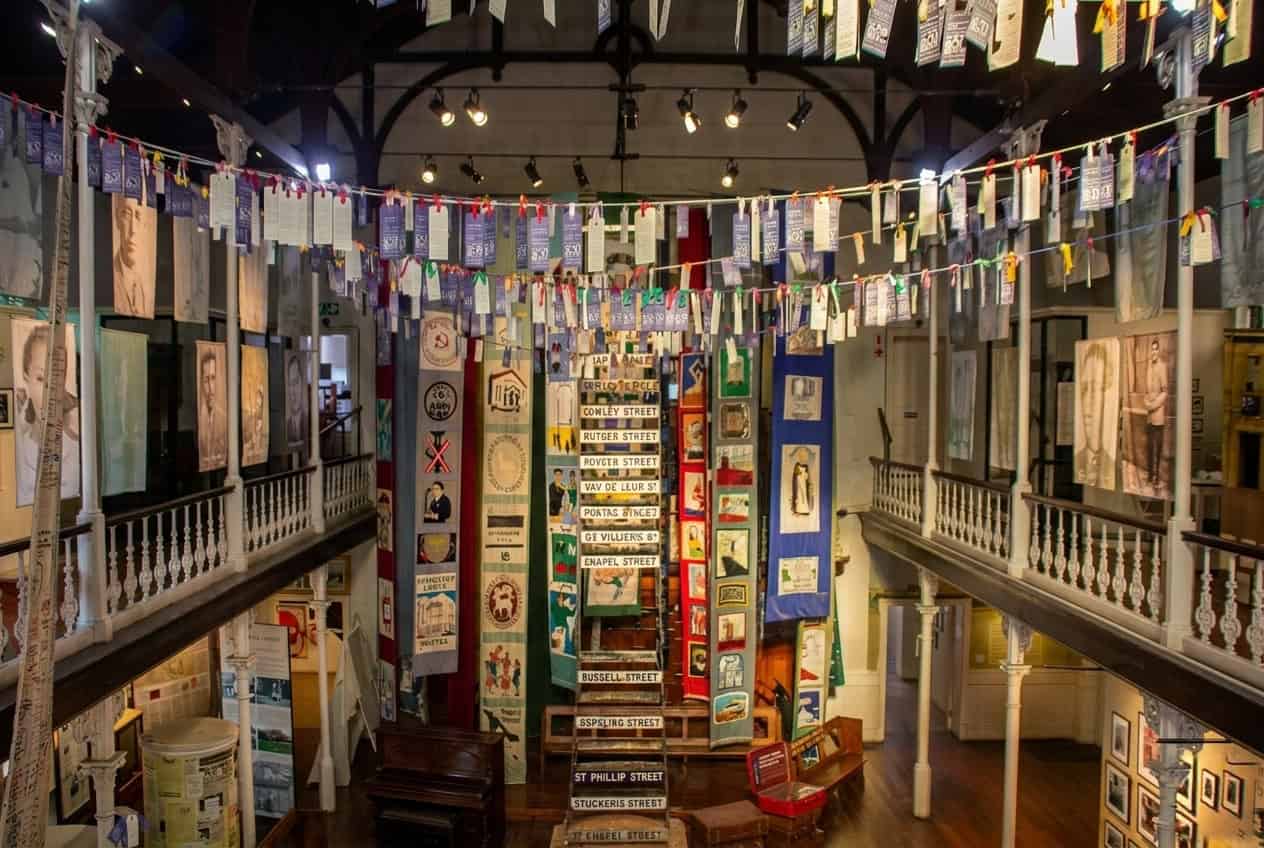
Walking inside the first thing you’ll notice isn’t the artifacts, but the floor. A massive, hand-painted map of District Six covers the ground. It’s covered in clear plastic because it’s meant to be walked on. You’ll see people—often elderly residents—kneeling down, tracing a finger along a street that no longer exists, and saying, “Here. This is where my grandmother’s house was.”
The Power of the Street Signs
Hanging in the center of the museum is a towering column of blue-and-white street signs. When the bulldozers came in 1966 after the area was declared a “Whites Only” zone under the Group Areas Act, a foreman was told to dump these signs in the ocean. Instead, he hid them in his cellar for twenty years. They represent the physical DNA of the neighborhood: Hanover Street, Richmond Street, Constitution Street.
- Key Takeaway: The museum is built on the concept of “reclamation.” Every item was saved, hidden, or donated by the people who were forced to leave.
2. Meet the Keepers of the Flame: The Guided Tours
You can walk through the museum on your own, but if you want the real experience, you have to book a tour with an ex-resident guide. These aren’t professional historians reading from a script; these are people who grew up playing in these streets, who remember the smell of the spices in the corner shops and the sound of the Coons (now the Kaapse Klopse) practicing for the New Year.
The Personal Narrative
I remember a tour led by a man named Noor. He didn’t talk about “urban policy” or “legislative frameworks.” He talked about his mother’s kitchen. He talked about the day the “G-vans” (police vans) arrived and gave them a few hours to pack their entire lives into boxes. Hearing this history from someone who lived it makes it impossible to look away.
The museum continues to prioritize these oral histories. If you have the chance, sit down and listen. It’s heavy, yes, but it’s also filled with a surprising amount of humor and warmth—a testament to the resilience of the people who lived there.
3. Exhibits That Speak: More Than Just Photos
While the floor map is the heart of the museum, there are several other permanent exhibits that deserve your time:
- The Embroidered Cloths: Look for the long white cloths hanging from the balconies. They are covered in hand-stitched memories, names of families, and messages from visitors. It’s a collaborative project that has been growing for decades.
- The Reconstructed Interiors: There are small alcoves that recreate a typical District Six bedroom or kitchen. It’s a reminder that this wasn’t just a “slum,” as the Apartheid government claimed; it was a vibrant, middle-class community of teachers, tailors, and dockworkers.
- The Soundscapes: Throughout the museum, you’ll hear the sounds of the neighborhood—ambient recordings of children playing and the call to prayer from the mosques that were, miraculously, some of the only buildings left standing when the bulldozers were done.
4. The Context: The Fight for Restitution
You might be wondering: if this happened sixty years ago, why is the land still empty? This is where the story gets modern. The District Six Museum isn’t just about the past; it’s an active participant in the fight for the return of the land.
The restitution process is still a major point of conversation in Cape Town. You’ll see new housing developments slowly rising on the edges of the site—modern apartments meant for the original claimants and their descendants. The museum acts as a watchdog and a support center for these families, many of whom have waited their entire lives to “come home.”
Key Takeaway: When you pay your entrance fee, you are directly funding the advocacy work that helps these families reclaim their heritage.
5. Expanding the Experience: The Homecoming Centre
Just down the road from the main museum is the District Six Homecoming Centre at 15 Buitenkant Street. This is the museum’s “second act.”
While the church is a space for mourning and memory, the Homecoming Centre is a space for celebration and the future. It hosts theater performances, art exhibitions, and community workshops. It has become a central hub for Cape Town’s creative scene.
Where to Grab a Coffee Nearby
After an emotional morning at the museum, you’re going to need a moment to decompress. Fortunately, the museum is located in one of the most interesting parts of the city.
- Charly’s Bakery: Just a short walk away. Famous for their “mucking afazing” cakes and bright pink exterior, it’s a Cape Town icon.
- Truth Coffee Roasting: Often voted the best coffee shop in the world. Its steampunk aesthetic and high-octane espresso are the perfect sensory shift after the quiet of the museum.
- The Fugard Theatre: Located in the same building as the Homecoming Centre, it is one of the city’s premier venues for local drama and musical performances.
6. Practical Tips for Your Visit
To get the most out of your visit to the District Six Museum, keep these details in mind:
- Booking is Essential: Especially for guided tours. The museum is small, and they limit the number of people inside to keep the experience intimate. You can book directly on their website.
- Operating Hours: Usually 09:00 to 16:00, Monday to Saturday. They are typically closed on Sundays.
- Sensitivity: This is an emotional space. It’s not uncommon to see people crying or in deep reflection. Keep your voice low, and always ask permission before photographing residents or staff.
- The Gift Shop: This is one of the best museum shops in the city. They sell books, posters, and local crafts that you won’t find at the V&A Waterfront. The proceeds go toward the museum’s upkeep.
Why This Matters Now
In a world that feels increasingly polarized, the District Six Museum stands as a reminder of what happens when we stop seeing each other as neighbors. But it’s also a story of hope. It’s a story about a group of people who refused to be forgotten, who kept their street signs in their cellars and their stories in their hearts until the world was ready to listen.
When you walk back out onto the streets of Cape Town after your visit, the city looks different. Those empty fields on the mountainside aren’t just grass anymore; they are ghosts of kitchens, bedrooms, and dance halls. You’ll realize that Cape Town’s beauty isn’t just in its scenery—it’s in the incredible, stubborn spirit of the people who call it home.
Bold Takeaway: If you only visit one cultural institution in Cape Town, make it this one. Table Mountain is the body of the city, but District Six is its soul.