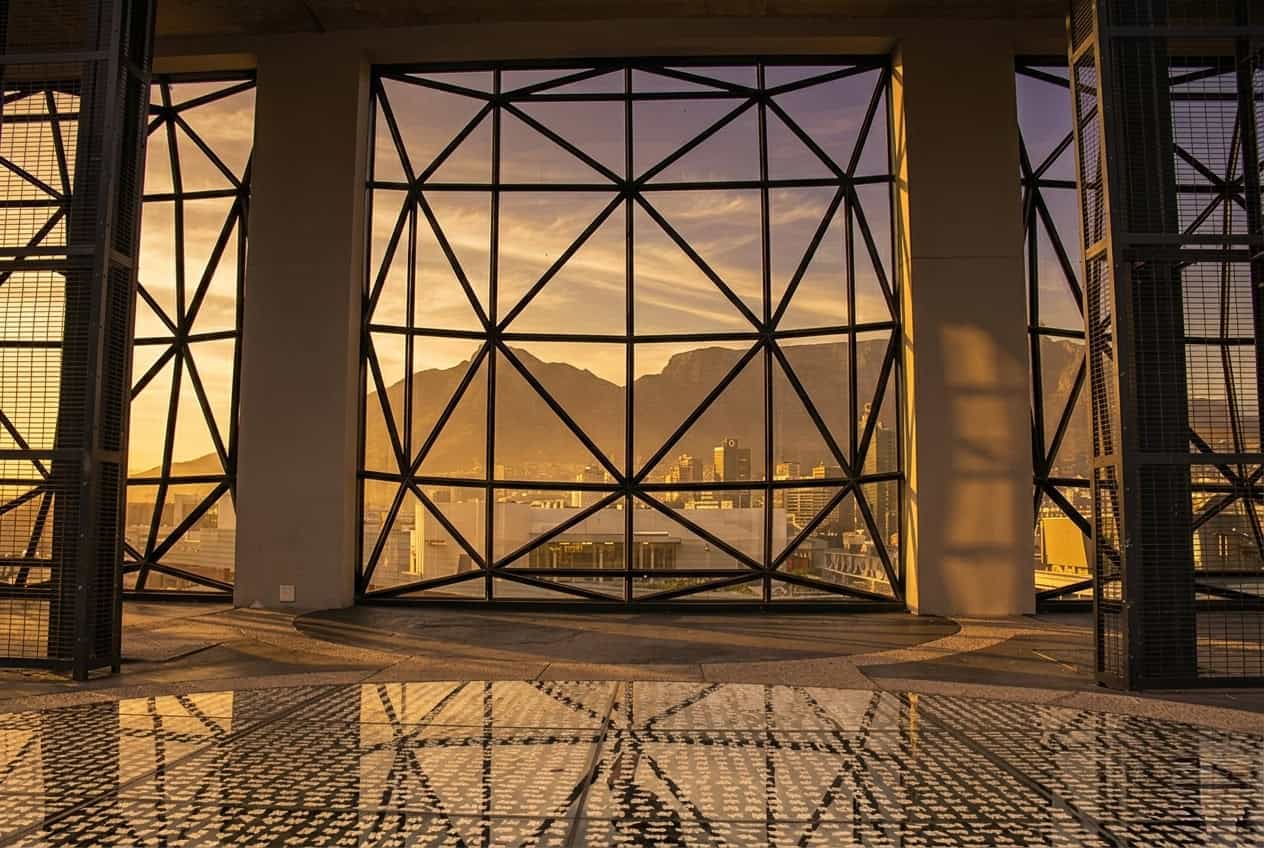
If you’ve spent any time walking around the V&A Waterfront, you’ve seen it. It’s that massive, imposing concrete structure with the bulging, geometric windows that look like something out of a high-budget sci-fi film. It’s not a villain’s lair, though it certainly has the aesthetic for one. It is the Zeitz MOCAA (Museum of Contemporary Art Africa), and it remains the undisputed heavy-hitter of the African art world.
I remember the first time I walked into the atrium. You expect a museum to feel like a gallery—white walls, quiet halls, maybe some soft lighting. Instead, you walk into a hollowed-out grain silo that feels like a cathedral carved by robots. It’s disorienting, awe-inspiring, and a little bit intimidating. But that’s exactly the point. The Zeitz isn’t just a place where art hangs on walls; the building itself is the first and most important piece of art you’ll encounter.
Whether you’re an art historian or someone who just wants a cool photo for your feed, navigating these nine floors can be overwhelming. Let’s break down what you actually need to see, how to avoid the “museum fatigue” that hits around floor four, and where to find the best views in the city.
1. The Architectural Heart: The Atrium
Before you even look at a painting, you have to talk about the hole in the middle of the building. This structure was originally a grain silo built in 1921, and for decades, it was the tallest building in Sub-Saharan Africa. When the legendary Thomas Heatherwick was tasked with turning it into a museum, he didn’t just knock down walls. He took a single grain of corn, digitally scanned it, and then “carved” that shape out of the 42 concrete tubes that make up the building’s core.
The Cylindrical Elevators
One of the most “human” things you can do here is just stand in the atrium and look up. The light filters down from the roof through toughened glass, illuminating the raw, cut edges of the concrete.
- The Experience: Take the cylindrical glass elevators. It feels a bit like being inside a pneumatic tube in a 1950s office. As you rise, you see the cross-sections of the silos passing by.
- Pro-Tip: If the elevators are busy, take the spiral staircase. It’s a workout, but the perspective you get on the architecture from the halfway points is unparalleled.
Key Takeaway: Don’t rush to the galleries. Spend at least fifteen minutes in the atrium. It’s the only place on earth where you can stand inside a “geometric corn grain” carved out of 100-year-old concrete.
2. What’s Inside: The Art of the African Diaspora
The Zeitz MOCAA doesn’t just show “African art” in a vague, generalized sense. Its mission is to showcase 21st-century art from Africa and its diaspora. This means you’re going to see work that is politically charged, technically brilliant, and often deeply personal.
The Permanent Collection
While the museum rotates its exhibitions frequently, the core of the collection (much of it originally from Jochen Zeitz) focuses on heavyweights like William Kentridge, Kudzanai Chiurai, and Nandipha Mntambo.
- The Mediums: You aren’t just looking at oil on canvas. Expect massive installations made of found materials, high-concept photography, and room-sized video projections.
- The “Wow” Rooms: There is usually at least one floor dedicated to large-scale sculpture. The focus has shifted toward immersive, sensory installations where sound and scent play as much of a role as sight.
Temporary Exhibitions
Currently, the museum is leaning heavily into the intersection of technology and traditional craft. You’ll find incredible beadwork transformed into digital avatars and sculptures that use recycled e-waste to comment on global consumption.
Key Takeaway: This isn’t a “stuffy” museum. The art here is loud, it’s urgent, and it’s meant to provoke a reaction. If a piece makes you feel uncomfortable or confused, it’s probably doing its job.
3. The Rooftop Garden and the Best View in the Cape
If the art gets a bit too heavy, head to the top. The rooftop of the Zeitz is home to a sculpture garden that feels like a quiet sanctuary above the chaos of the harbour.
The Sculpture Garden
Here, you’ll find works that interact with the Cape Town wind and sun. But let’s be honest: most people are here for the 360-degree view. From the roof, you can see:
- The V&A Waterfront Harbour buzzing below.
- The back of Table Mountain, looking far more rugged than it does from the city side.
- The shimmering expanse of Table Bay.
The Silo Rooftop
While the museum has its own terrace, the absolute “flex” move is to head over to the Silo Hotel Rooftop for a cocktail afterward. The hotel occupies the top six floors of the elevator tower, and its glass “pillowed” windows are the ones you see from the outside.
Key Takeaway: The rooftop is the perfect palate cleanser. The combination of high-altitude sculptures and the Atlantic breeze is the best way to process everything you just saw in the galleries.
4. Logistics: Times, and “Free” Days
Let’s talk about the practical side. Art is great, but navigating the ticket line isn’t.
- African Citizens: If you have a valid South African ID or an African passport, there are often discounted rates. Historically, “Free Wednesdays” for African citizens (between 10 am and 1 pm) have been a staple, but always check their official site for the most current schedule as these slots fill up fast.
- Timing: Give yourself at least three hours. Anything less and you’re just sprinting past masterpieces. The museum is generally open from 10 am to 6 pm, Tuesday through Sunday.
5. The Silo District: Where to Eat and Decompress
The area immediately surrounding the museum, known as the Silo District, has become a culinary destination in its own right. You shouldn’t just leave the area once you’re done with the art.
OUIBar + KTCHN
Located in the Radisson RED, this is the “cool younger brother” of the district. It’s casual, dog-friendly, and has a great urban energy. It’s the perfect place to grab a burger and a craft beer while you scroll through the photos you just took.
The Yard
If you’re looking for something a bit more sophisticated, The Yard is a fusion of fine dining and a deli. Their curry bowls are legendary, and the interior design is almost as chic as the museum itself.
Zeitz MOCAA Food
Don’t overlook the museum’s own restaurant on the 6th floor. It offers a “Black Tie” level of service with a view that rivals any five-star establishment in the city. Their high tea is a particularly posh way to spend a February afternoon.
Key Takeaway: The Silo District is a bubble of high-end design. Even the benches and the paving stones are curated. Take a slow walk around the Silo Square after your visit to soak it all in.
6. Tips for the “Non-Art” Person
I get it. Sometimes museums feel like a lot of work. If you’re dragged here by a partner or a friend and you aren’t “into” contemporary art, here is how to survive and enjoy it:
- Look for the Scale: Even if you don’t “get” a piece, appreciate the sheer effort it took to make it. Some of these installations weigh tons or took thousands of hours to weave.
- The Shop: The Zeitz MOCAA Shop on the ground floor is incredible. It’s not just postcards and magnets; it’s high-end jewelry, local fashion, and books you won’t find anywhere else. It’s basically a gallery where you can actually buy the stuff.
- The People Watching: The Zeitz attracts the most stylish people in Cape Town. Sit in the atrium for ten minutes and you’ll see some of the best street fashion in the Southern Hemisphere.
Final Thoughts: Why It Matters
For a long time, the global art world ignored Africa or treated it like a footnote. The Zeitz MOCAA changed that. It’s a statement of intent. It says that African stories are world-class, that our history deserves a cathedral, and that our future is being shaped right here in the Mother City.
Standing in that hollowed-out silo, you feel the weight of the past (all that concrete and grain) and the energy of the future (the art on the walls). It’s a bridge between the two. February is the perfect time to visit—the light is golden, the mountain is clear, and the museum provides a much-needed cool refuge from the midday sun.
Just remember to look up. In a building this complex, the most interesting thing is often happening right above your head.